
Last updated October 16, 2026
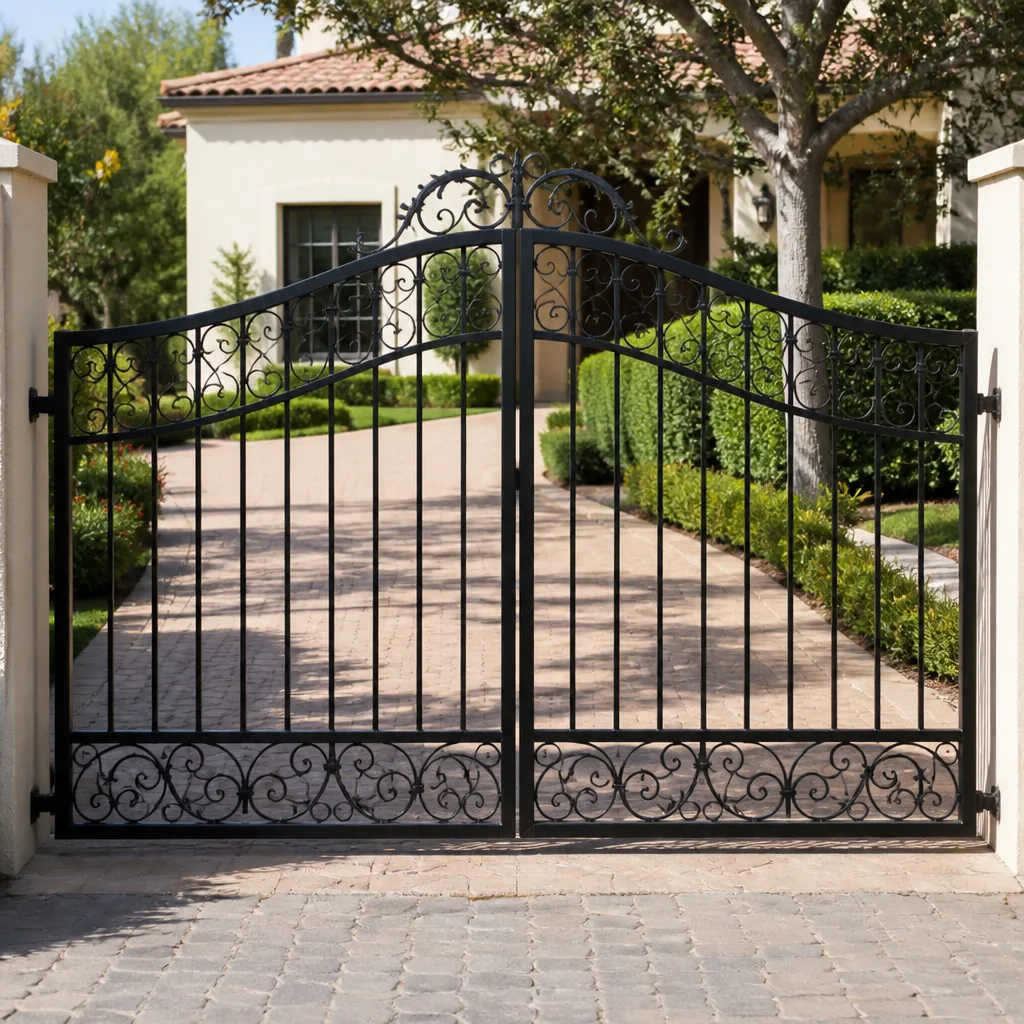 Wrought iron
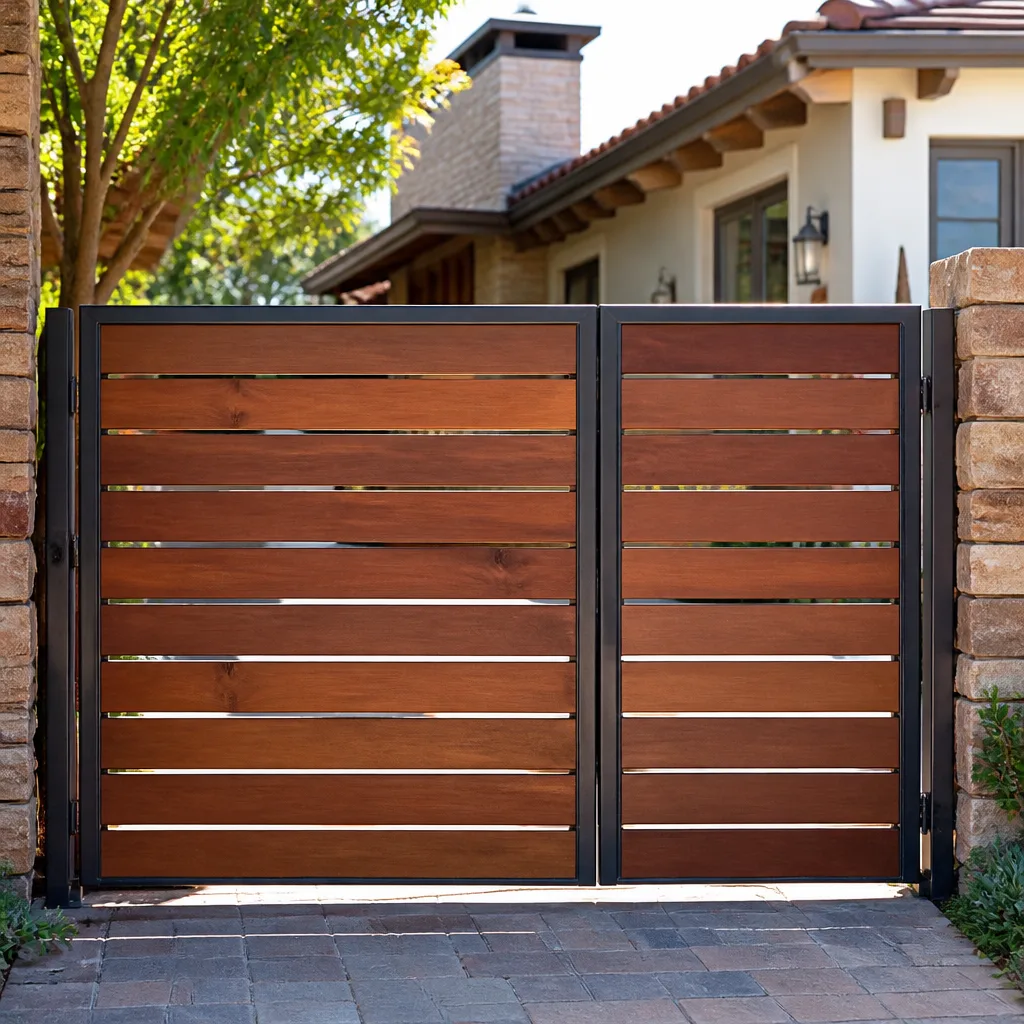 Wood & steel frame
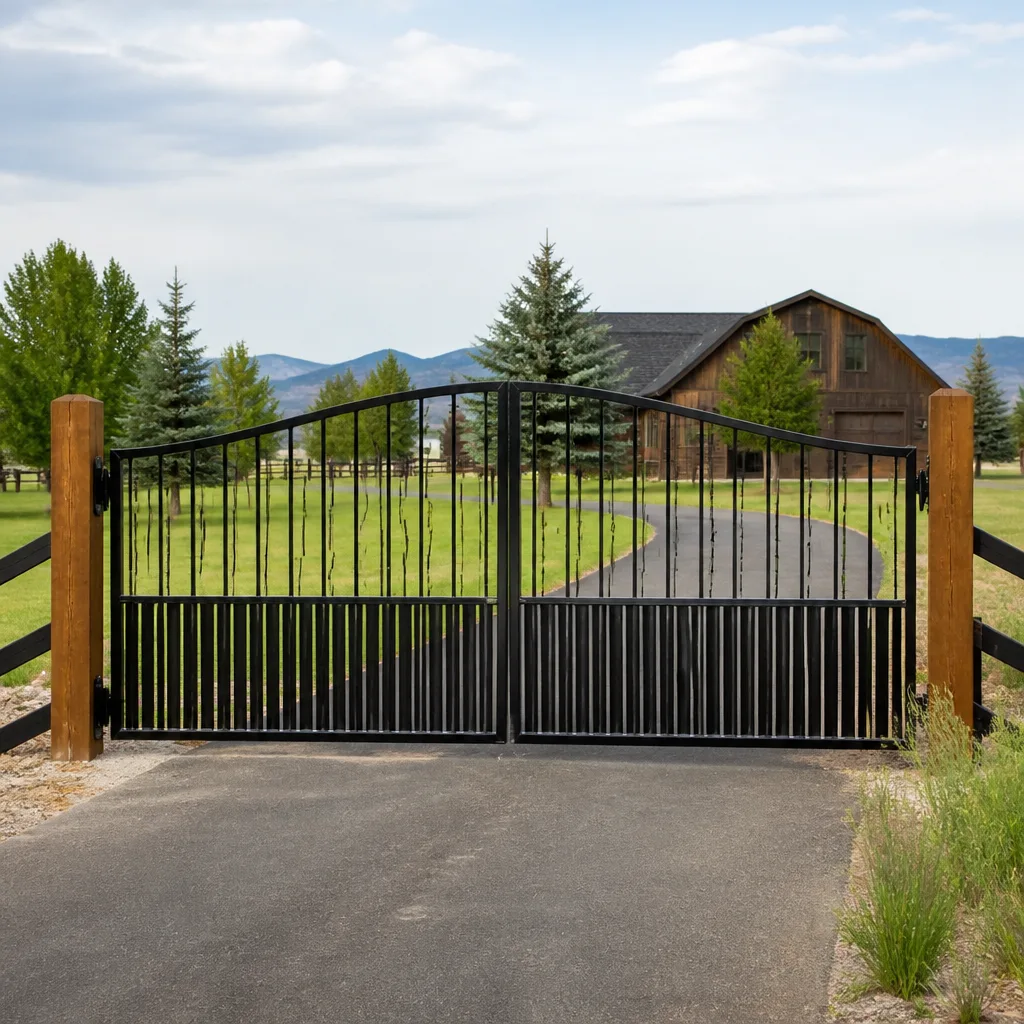 Farm & ranch
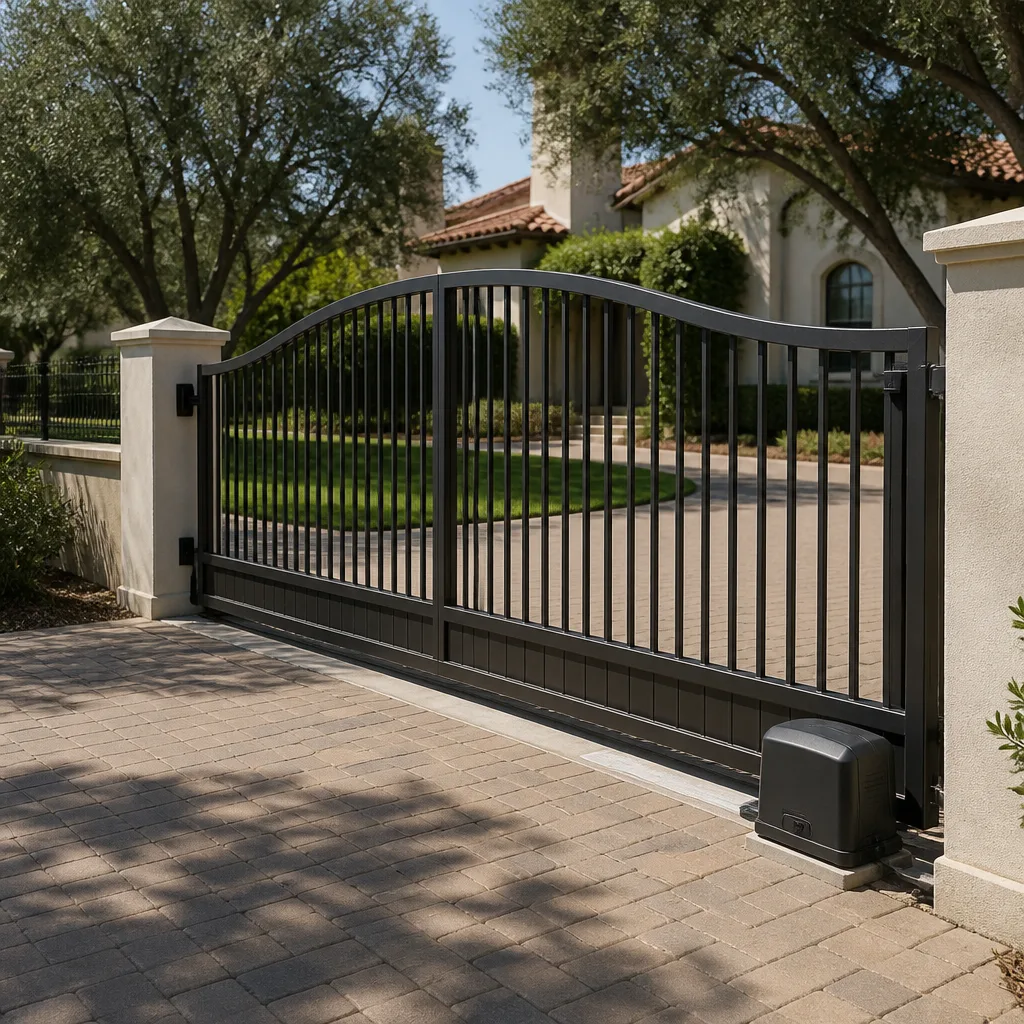 Sliding driveway gates
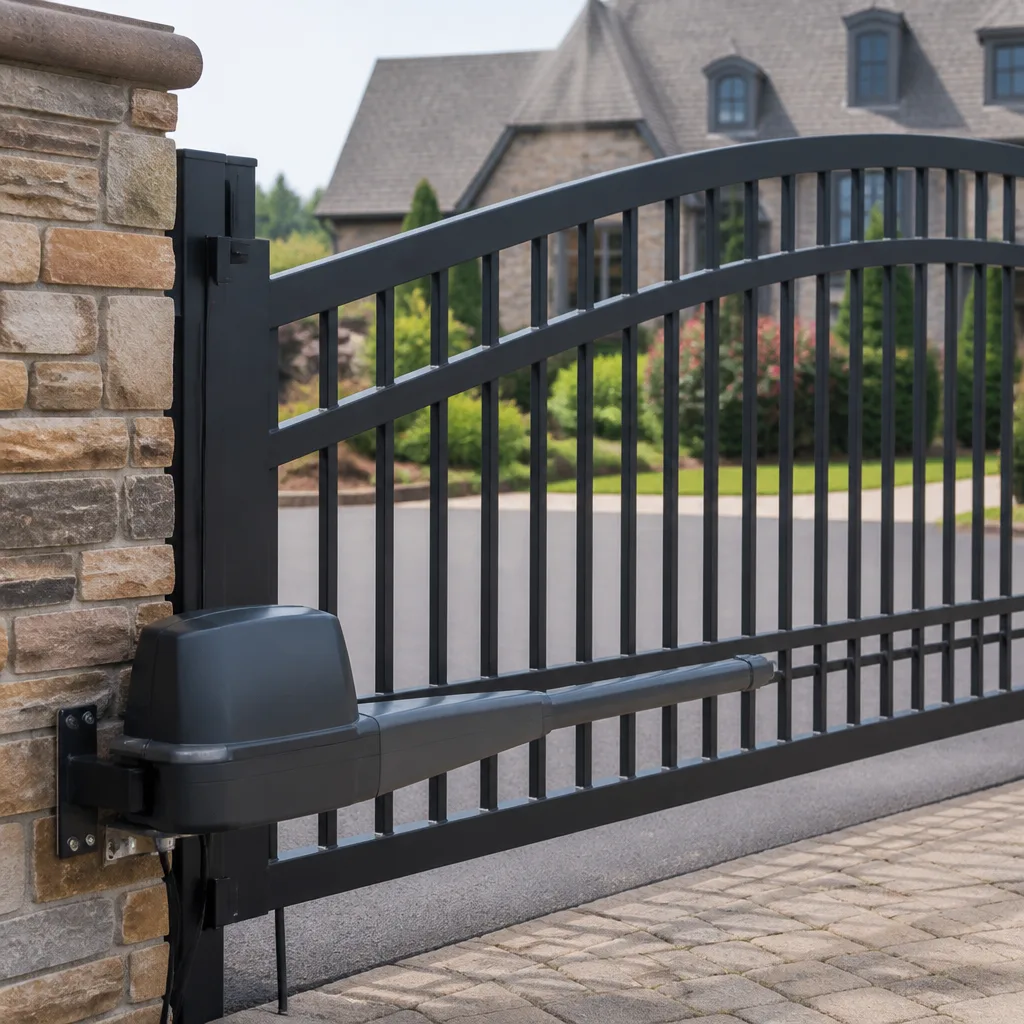 LiftMaster operators
Free on-site gate assessment - hinges, posts, and your LiftMaster or Nice gate operator checked before anything is quoted
The assessment is free and the quote is the invoice.
Get your free estimateThe Complete Guide to Gate Repair in Orlando
Orlando’s average humidity sits above 74% year-round. That single number explains why a gate opener that lasts 12 years in Phoenix fails in under 6 here, and why most national repair guides are useless to you. This guide maps Orlando’s actual gate ecosystem: HOA swing gates in Baldwin Park, estate slide gates in Windermere, dual-swing driveway gates in Dr. Phillips. You’ll learn what you actually own, what breaks first in this climate, what repairs should cost, and how to hire without getting burned.
Styles & brands we work with
Quick Answer
Gate repair in Orlando typically costs $175 to $650 depending on the failure point: limit switches and circuit boards corrode fast in Florida humidity, while post-storm surge damage pushes repair bills higher between June and November. Most repairs are same-day jobs when the opener is the culprit, and a specialist like Calder Gate Repair Orlando can diagnose and quote before any work starts.
Table of Contents
- The Orlando Gate Ecosystem: What You Actually Own
- How Orlando Humidity and Storms Kill Gate Openers
- The 5 Most Common Gate Repairs in Orlando (And What They Cost)
- Brand-Specific Behavior: FAAC, Linear, and Viking in Florida Conditions
- How to Document Gate Damage for Insurance After an Orlando Storm
- The Relay Visibility Guarantee: What It Actually Means in Practice
- What You Can Safely Check Yourself (And What You Absolutely Shouldn’t Touch)
- Common Mistakes to Avoid
- When to Call a Professional
- Frequently Asked Questions
- The Bottom Line
The Orlando Gate Ecosystem: What You Actually Own
Most homeowners describe their gate as “the electric one,” but the repair path looks completely different depending on the configuration. Orlando’s housing stock falls into three dominant gate types, and they show up in predictable neighborhoods. Knowing which one you have saves you a diagnostic fee and a wasted visit.
1. HOA Pedestrian Swing Gates
These are the single-arm swing gates you see at community entrances in Avalon Park, Lake Nona, and MetroWest. They’re typically FAAC or Linear openers bolted to a steel post, running on a 12-volt or 24-volt system with a keypad and sometimes a telephone entry module. These gates cycle dozens of times per day, far more than a residential driveway gate ever will. That constant cycling wears out limit switches and hinge bushings faster than anything else. We see HOA pedestrian gates in Orlando need limit switch replacement every 18 to 24 months, versus every 4 to 5 years for the same part on a residential slide gate.
If your community’s pedestrian gate sticks open, slams shut at full force, or stops responding to the keypad, you’re describing the classic failure profile of an overworked swing gate. The repair is usually straightforward for a technician, but performing it yourself on a live HOA gate is genuinely dangerous – these gates have enough torque to break bones, and the circuit boards carry live voltage even when the gate appears off. A trained professional knows how to isolate power safely before working.
2. Residential Slide Gates
Slide gates dominate the acre-plus lots in Windermere, Winter Garden, and parts of Seminole County. These are cantilever or V-track sliders, almost always running on Viking or BFT operators. The gate itself rolls on wheels along a track or hangs from rollers on a beam. In sandy soil areas near the Wekiva basin, we see wheel bearing failures more often because grit works into the sealed bearings. In neighborhoods with older concrete aprons, misaligned tracks cause the gate to bind and strain the motor until it overheats.
The diagnostic question that separates slide gate problems from swing gate problems is simple: does the gate move at all? If it hums but doesn’t move, you have a clutch, capacitor, or gearbox issue. If it moves a few inches and stops, you have a track obstruction, a bent wheel bracket, or a limit switch that’s lost its calibration. Local soil conditions actually matter here: Orlando’s sandy substrate allows concrete aprons to shift more than homeowners expect, and that shift is what knocks slide gates out of alignment.
3. Estate Dual-Swing Gates
These are the ornamental iron or aluminum driveway gates in Bay Hill, Isleworth, and the lakefront streets of Winter Park. Dual-swing means two gate leaves that meet in the middle, each with its own hinge set and often its own opener arm. The opener brand mix here leans toward FAAC and BFT, both Italian brands engineered for high-cycle use but not always tolerant of Florida’s moisture intrusion patterns.
Dual-swing gates fail unevenly. One leaf will lag behind the other, then the control board tries to compensate by over-adjusting the travel limits. That mis-sync is the single most common dual-swing repair call we get in Orlando’s estate neighborhoods. The second most common is a broken hinge on the heavier leaf, usually the one with a pedestrian inset door cut into it. The combined weight of two ornamental steel leaves plus a pedestrian door creates stress concentrations that single-leaf gates simply don’t have.
How Orlando Humidity and Storms Kill Gate Openers
Orlando’s failure patterns are different from the rest of the country, and they’re predictable once you understand what moisture does to electronics. Here’s what actually happens inside the box.
Circuit Board Corrosion
The control board is the brain of your gate system, and it’s enclosed in a weather-resistant housing. Weather-resistant, not weatherproof. In a dry climate, a control board might run 10 years. In Orlando, condensation forms inside the housing every morning when the temperature swings, and that moisture sits on the board’s solder joints. Over time, corrosion bridges connections that shouldn’t touch, and the board starts behaving erratically: the gate opens halfway, the keypad lights up but won’t respond, the gate opens by itself at 3 a.m.
We’ve replaced control boards in Orlando gates that were only 4 years old, while the same model board in a Las Vegas installation was still running at year 12. The fix is straightforward: a board replacement runs $220 to $450 depending on brand, installed. But the prevention is better: adding a desiccant pack inside the housing and checking the weather seal once a year extends board life significantly.
Limit Switch Failure
The limit switch is the small sensor that tells the gate when to stop moving in either direction. In humid air, the switch contacts oxidize. A sticky limit switch produces the classic symptom: the gate opens fully, then slams shut hard and reverses, or jitters at the end of travel. Homeowners describe it as “the gate seems confused.” It’s actually just a sensor giving bad position feedback.
At electric gate repair in Orlando calls, limit switches are involved in about 30% of diagnoses. The repair is cheap – $80 to $160 typically – and the replacement takes under an hour. But the symptom pattern matters: if your gate slams at the end of its travel, stop running it until it’s fixed. Every slam cycle puts stress on the hinge welds and the operator gearbox.
Battery Backup Failure
Afternoon thunderstorms mean power interruptions. Any gate opener in Orlando that has a battery backup (and most estate gates and HOA gates do) will cycle that battery during storms. Flooded lead-acid batteries last 2 to 3 years in this heat. Sealed AGM batteries last a bit longer but still degrade. When the battery dies, the gate still works on utility power, but the moment a thunderstorm knocks out power, the gate is dead in whatever position it was in – usually open, which is a security issue.
A battery replacement runs $120 to $275 installed depending on the battery type and access. If your gate has a battery backup and you can’t remember the last replacement, assume it’s due.
Surge Damage
This is the expensive one, and it spikes between June and November. A nearby lightning strike sends a voltage spike through the power line, and the gate’s control board takes the hit. The board may fail immediately, or it may fail weeks later from weakened components. Post-storm surge damage is the single largest spike category for Orlando gate repair calls. A surge-damaged board needs replacement, and the bill lands between $250 and $520 depending on brand. Whole-home surge protection helps, but only a gate-specific surge suppressor on the dedicated circuit truly protects the opener.
The 5 Most Common Gate Repairs in Orlando (And What They Cost)
This is the section most people skip to. Here are the five repairs we see most often in Orlando, what causes them, and realistic price ranges for this market. Prices are for Orlando specifically; they vary by brand and access.
- Limit switch replacement: $80 – $160. Symptom: gate slams, jitters, or stops short. Compounded by humidity-driven contact oxidation.
- Control board replacement: $220 – $510. Symptom: erratic behavior, keypad unresponsive, gate opens by itself. Most often post-storm or corrosion-related.
- Photo eye (safety sensor) replacement or realignment: $95 – $190. Symptom: gate refuses to close, or reverses immediately. Misalignment is more common in Orlando because heavy rain shifts posts and knocks sensors out of line.
- Gearbox or drive belt replacement: $260 – $580. Symptom: motor hums, gate doesn’t move, or grinding sound. More common on dual-swing estate gates due to leaf weight.
- Battery backup replacement: $120 – $275. Symptom: gate dies during storms, keypad has no power when utility power is out.
None of these prices are final. A good operator quotes the price in writing before turning a bolt. That’s what our Calder Gate Repair Orlando customers get: a written price, not an estimate with “plus parts” buried in the fine print. Every price is agreed at the door before any work starts.
Brand-Specific Behavior: FAAC, Linear, and Viking in Florida Conditions
Different brands fail differently in Orlando’s climate. If you know your opener brand, this section tells you what to watch for. If you don’t know your brand, the opener housing or the manual in your garage will have a label.
FAAC in High Humidity
FAAC openers are the most common brand on Orlando’s estate and HOA swing gates, and they’re well-built machines. Their weak point in Florida is the hydraulic pump on high-cycle pedestrian gates. The hydraulic fluid absorbs moisture over time, which degrades the seals. The symptom is a gate that moves slower at the end of stroke or a gate that weeps fluid at the pump. FAAC parts are widely available in the Orlando market, which keeps repair times short.
Linear in High Humidity
Linear dominates the mid-range residential market in neighborhoods like Hunter’s Creek and Conway. These openers use a belt-driven carriage system that’s quiet and durable, but the carriage itself doesn’t tolerate grit. Florida’s sandy soil and lawn debris work into the carriage channel, and the belt starts slipping. The symptom is a gate that opens halfway and stalls. The good news: Linear parts are inexpensive, and a carriage rebuild usually runs under $200.
Viking in High Humidity
Viking is the brand you see most on residential slide gates in Windermere and the Wekiva area. These openers are built with sealed circuit boards, which helps with humidity, but their external relay connections corrode more readily than other brands we service. When a Viking gate stops responding to the keypad but the motor still works, it’s almost always a corroded relay socket. The fix is simple and typically under $100.
If your opener is a BFT, the story is similar to FAAC: strong hardware, watch the circuit board enclosure seals. Whichever brand you have, a technician who’s factory-familiar with it will diagnose faster than a generalist. We train our techs on nine brands because no two of them behave the same way in this climate, and we’d rather know the quirks than discover them on your job.
How to Document Gate Damage for Insurance After an Orlando Storm
Orlando’s post-storm surge claims spike every June through November, and homeowners routinely lose money because they didn’t document properly. Here’s the sequence we recommend to our own customers.
- Photograph everything before touching anything. Get wide shots showing the gate, the opener housing, and any fallen debris. Then close-ups of visible damage: bent gate leaf, cracked housing, exposed wiring.
- Locate the opener’s brand and model information. Photograph the label. Insurance adjusters process claims faster when they can verify the model and its replacement cost without a second visit.
- Note the position the gate was in when you found it. Was it stuck open? Stuck shut? Half-open? That position detail helps an adjuster determine whether the damage was wind-related or surge-related, and both can be covered under different riders.
- Get a written repair quote before filing. Most insurers want a repair estimate from a licensed professional. A quote that itemizes parts and labor gives the adjuster a number to work from. We provide a written, itemized price for every repair, which means you can file with real numbers, not a guess.
- Don’t run the gate after storm damage. If the gate moved during a storm but is now stuck, running the opener under load can strip the gearbox and turn a covered claim into a mechanical repair you pay for out of pocket. Call a professional first.
Storm damage repair bills in Orlando run from $250 for a simple board surge replacement to over $2,000 for a full operator replacement with a new arm. Filing correctly is the difference between your homeowner’s policy covering it and you eating it.
The Relay Visibility Guarantee: What It Actually Means in Practice
We’re part of the Relay Home Co. family, and every Calder Gate Repair Orlando job runs on The Relay Visibility Guarantee. Here’s what that means for you, specifically.
When you book, you get a live arrival window, not a four-hour block. Your technician’s name and photo arrive on your phone, and you can track their arrival time in real time. That technician is background-checked and arrives in uniform. Before any work starts, you get a written price, and the number on the invoice is the number you agreed to. And every repair carries the 365-Day Done Right Promise: if the repair fails within 365 days, we come back and make it right at no charge. That’s a written guarantee on every job, not a verbal promise.
The point isn’t branding. It’s the recognition that hiring a tradesperson requires you to hand over your address, your security vulnerability, and your money. You deserve to know who’s coming, when they’ll arrive, and what it’ll cost. That’s the standard we set for ourselves. It’s also why we recommend that anyone hiring a gate repair company in Orlando ask one question: “Will you give me the price in writing before you start?” If the answer is anything other than yes, call someone else.
For a full breakdown of what our gate repair service in Orlando covers, see the detailed page on that exact topic.
What You Can Safely Check Yourself (And What You Absolutely Shouldn’t Touch)
Some gate problems are user-serviceable. Others can genuinely hurt you or make the problem worse. Here’s the honest split from a repair specialist who’s seen both sides, and you can read DIY vs Professional Gate Repair: The Orlando Homeowner’s Decision Guide for a deeper look.
Safe to Check Yourself
- Photo eye alignment: Look for blinking LEDs on the sensors. If one isn’t lit or is flickering, wipe the lens and re-aim it. This fixes about 15% of “gate won’t close” calls in Orlando, because storms knock sensors out of line constantly.
- Keypad battery: A dead 9-volt in the wireless keypad is the simplest fix in the industry. If the keypad does nothing when you press buttons, swap the battery before calling anyone.
- Debris in the track: Slide gates collect leaves, sand, and grass clippings in the V-track or on the rail. A quick sweep can resolve binding. Don’t run the gate with debris in the track; that strains the motor.
- Manual release check: Most openers have a manual release lever. If the gate moves freely when disengaged but won’t move under power, you’ve narrowed the problem to the opener itself, not the gate.
Do Not Touch These
- High-tension springs and cables on counterweight gates: These are under enough load to cause serious injury if released incorrectly. A real expert always flags this. Call a professional.
- Live circuit boards: Control boards carry voltage even when the gate appears powered down. Diagnostic probing without proper isolation can cause an electrical shock or a short that ruins the board.
- Any gate that’s bearing weight on a bent hinge or support: A gate leaf that’s partially failed can shift suddenly. If the gate looks physically damaged – bent arm, leaning post, cracked weld – don’t operate it manually or under power.
- Hydraulic pumps on FAAC units: Hydraulic fluid under pressure plus a failed seal equals a spray hazard. Not worth it.
The general rule: electronics and mechanical assemblies are professional territory. External sensors, batteries, and obvious debris are fair game for a homeowner. If in doubt, call us, and we’ll tell you over the phone whether it’s worth a service call. The phone number is (850) 338-6230, and a live person answers 24/7.
Common Mistakes to Avoid
- Running a misaligned gate until it “fixes itself.” Gates never fix themselves. Every cycle with a misaligned sensor or failing limit switch adds mechanical stress, and the eventual failure is always more expensive than the early fix was. If you notice the gate behaving differently, that’s the moment to call.
- Assuming the repair will be covered by a home warranty. Most home warranty policies exclude gate openers entirely or cap coverage at a few hundred dollars. Read the fine print. Many of our customers discover this after paying a warranty service fee and waiting two days for a denial.
- Buying the cheapest replacement board online and installing it blind. Counterfeit and rebuilt control boards are a real problem on the major e-commerce platforms. A board that arrives untested and mislabeled costs you a second diagnostic when it doesn’t work. We source through manufacturer channels to avoid exactly this.
- Waiting until the gate completely dies before calling. The symptom-to-failure window on most Orlando gate repairs is months, not days. A gate that hesitates, slams, or responds slowly is telling you something. The $120 limit switch you ignore today becomes a $500 board or gearbox tomorrow. If you catch the early signs of a failing gate opener in Orlando, the repair is almost always faster and cheaper.
- Forgetting the battery backup. Orlando’s storm season exposes dead backup batteries every single summer. If you haven’t replaced your battery in 3 years and a thunderstorm knocks out your gate, you’ll be operating manually until a tech arrives.
- Not verifying the technician’s experience with your specific opener brand. Every brand has local quirks. A technician who says “gates are gates” is about to learn FAAC hydraulic behavior on your dollar. Ask about brand experience before booking.
When to Call a Professional
If your gate makes a grinding sound, moves on its own, slams at the end of travel, or won’t respond to any input – stop running it and call a professional. These symptoms describe a mechanical or electrical failure that will not resolve with patience and will likely get worse with use.
Also call if you’ve had a lightning strike nearby, even if the gate still works. Surge damage is cumulative, and the board may fail weeks after the storm. A quick check now costs less than an emergency call later. If you notice intermittent issues on your electric gate in Orlando, that’s a signal, not a fluke.
Calder Gate Repair Orlando offers free estimates in Orlando – call (850) 338-6230 and a live person will answer, any hour, any day.
Frequently Asked Questions
Gate repair in Orlando typically runs $175 to $650 depending on the failure point. Limit switch replacement is $80 – $160, control board replacement is $220 – $510, and gearbox work lands between $260 and $580. Every Calder Gate Repair Orlando job includes a written price before any work starts, so you know the exact number before the repair begins. Call (850) 338-6230 for a free estimate.
In most cases, yes. We keep repair technicians dispatched across the Orlando metro area, and a live person answers the phone 24/7 to book or update a call. We serve the entire Orlando area including Windermere, Winter Garden, Lake Nona, Avalon Park, Dr. Phillips, and Bay Hill. Call (850) 338-6230 and we’ll give you a live arrival window.
A full replacement includes removing the old operator, installing the new opener (matched to your gate type and brand), programming all remotes and keypads, setting travel limits, and testing the full cycle. Before any work starts, you get a written price for the complete job. Call (850) 338-6230 for a free replacement estimate.
Yes. We handle low-voltage power runs from the control board to the opener, photo eye installation, safety edge retrofits, and all wiring associated with the gate system. If your gate lacks functional safety edges, we’ll flag that during the diagnostic and include it in your written quote. Call (850) 338-6230 and we’ll inspect your setup.
We service nine major opener brands: LiftMaster, FAAC, BFT, Linear, Viking, Ghost Controls, DoorKing, Elite, and Mighty Mule. Our technicians are factory-familiar with each brand’s failure patterns, especially in Orlando’s high-humidity environment. If you know your brand, tell us when you call (850) 338-6230 and we’ll bring the right parts.
Yes. Every repair carries the 365-Day Done Right Promise: if the repair fails within 365 days, we return and make it right at no charge. That guarantee is in writing on every job, not verbal. It includes a free second visit if the repair fails. That’s the standard, and it’s non-negotiable on every job we do in Orlando.
The Bottom Line
Orlando’s heat, humidity, and storm season create a specific set of gate failure patterns: corroded circuit boards, oxidized limit switches, dead backup batteries, and post-surge damage. Knowing what you own and which brand you have puts you ahead of most homeowners. For more guides & resources on keeping your gate running, explore our blog. The right repair professional will tell you the price in writing before starting, guarantee the work in writing, and answer the phone like a real human. That’s what Calder Gate Repair Orlando does. If your gate is struggling, don’t wait for it to die. Call (850) 338-6230. The estimate is free, a live person answers, and the price is the price.
Written by Nico Alvarez, Owner at Calder Gate Repair Orlando, serving Orlando since 2009.
See the difference
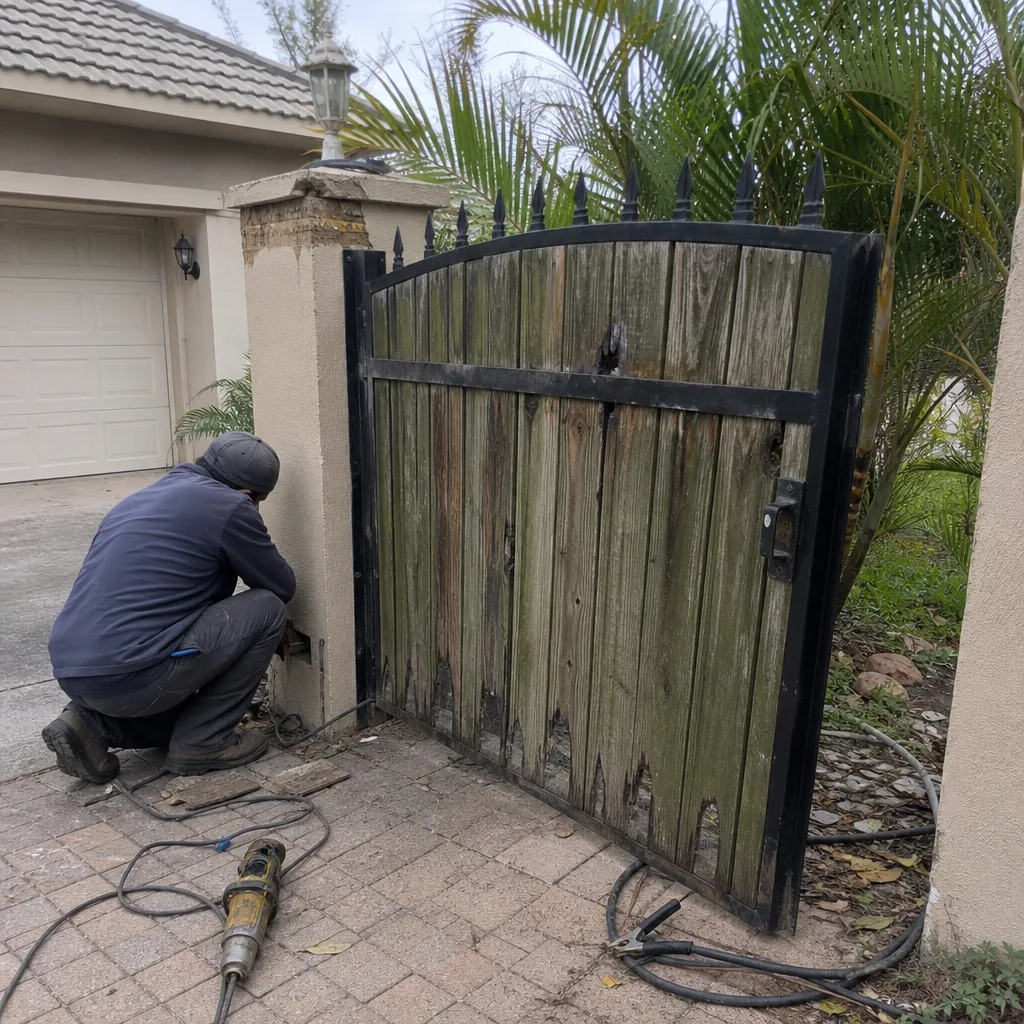 Before
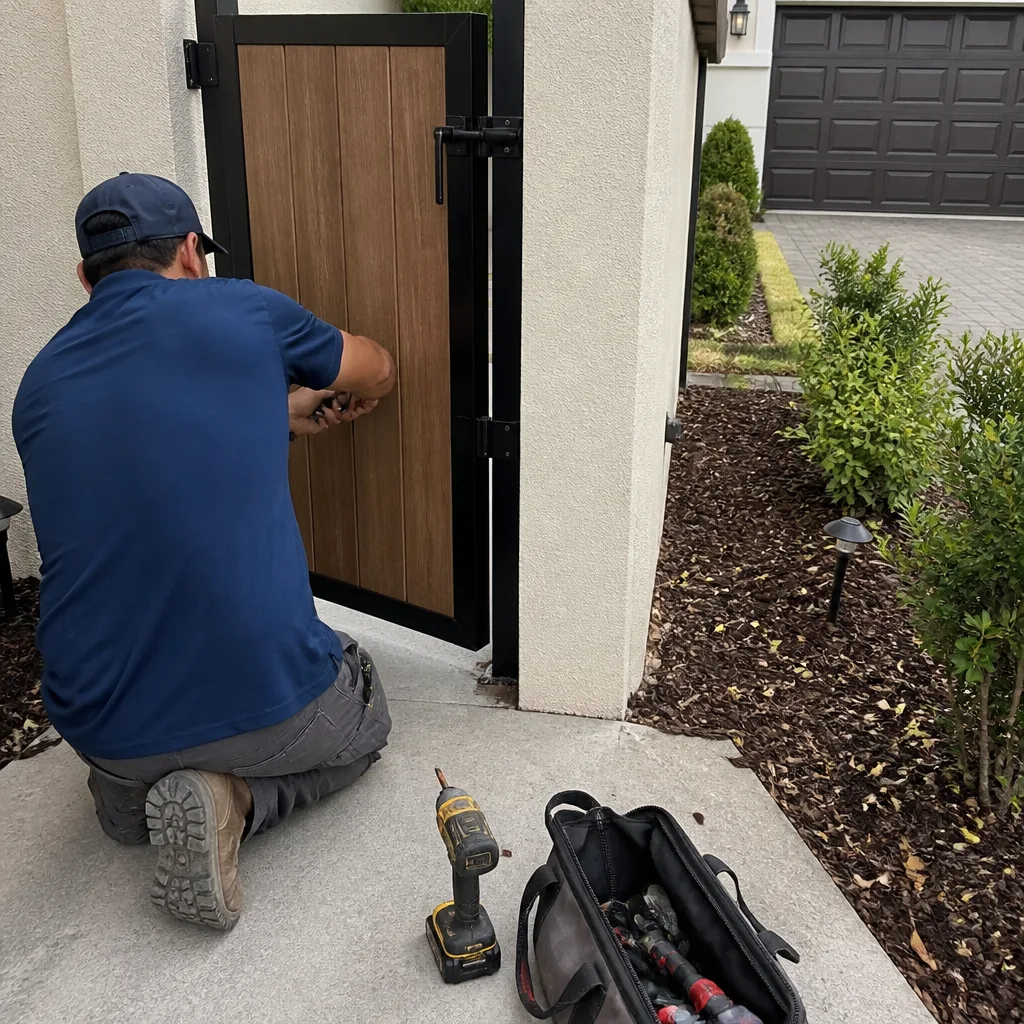 After
After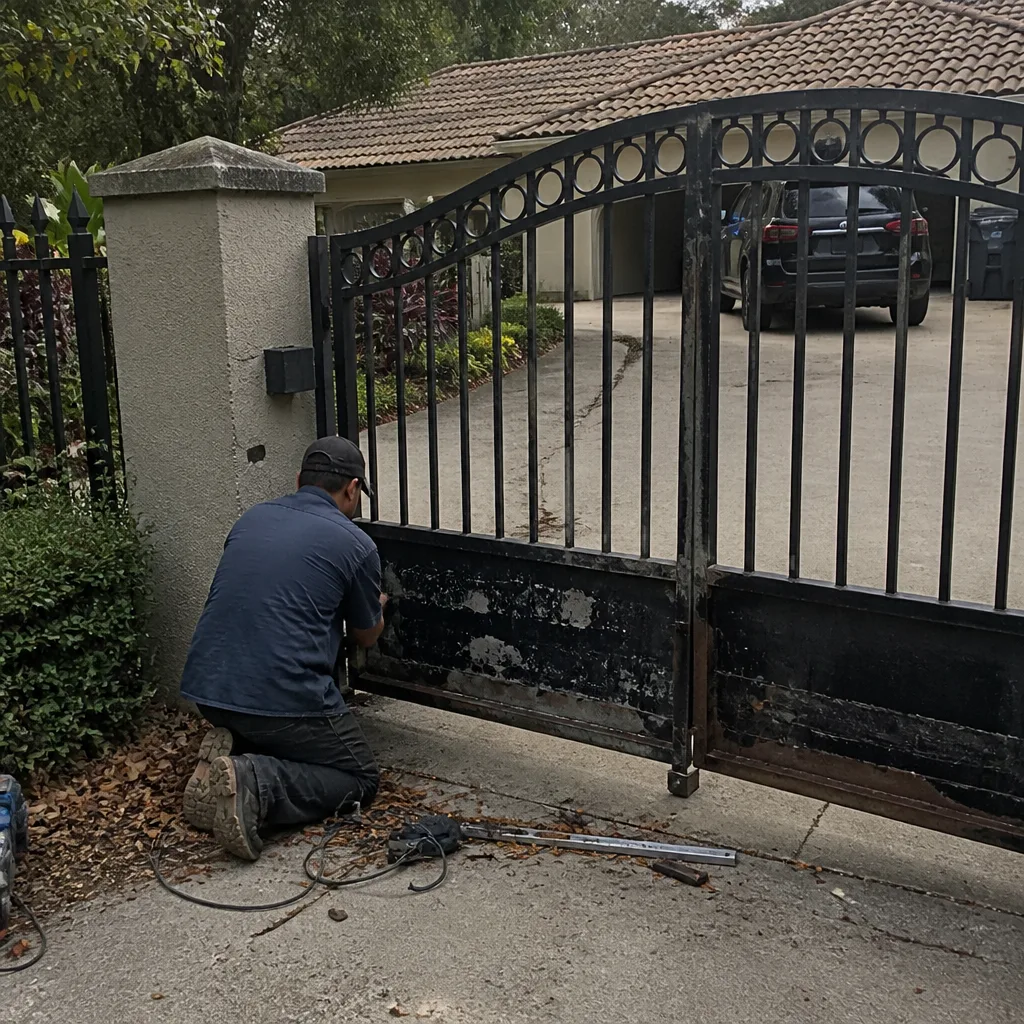 Before
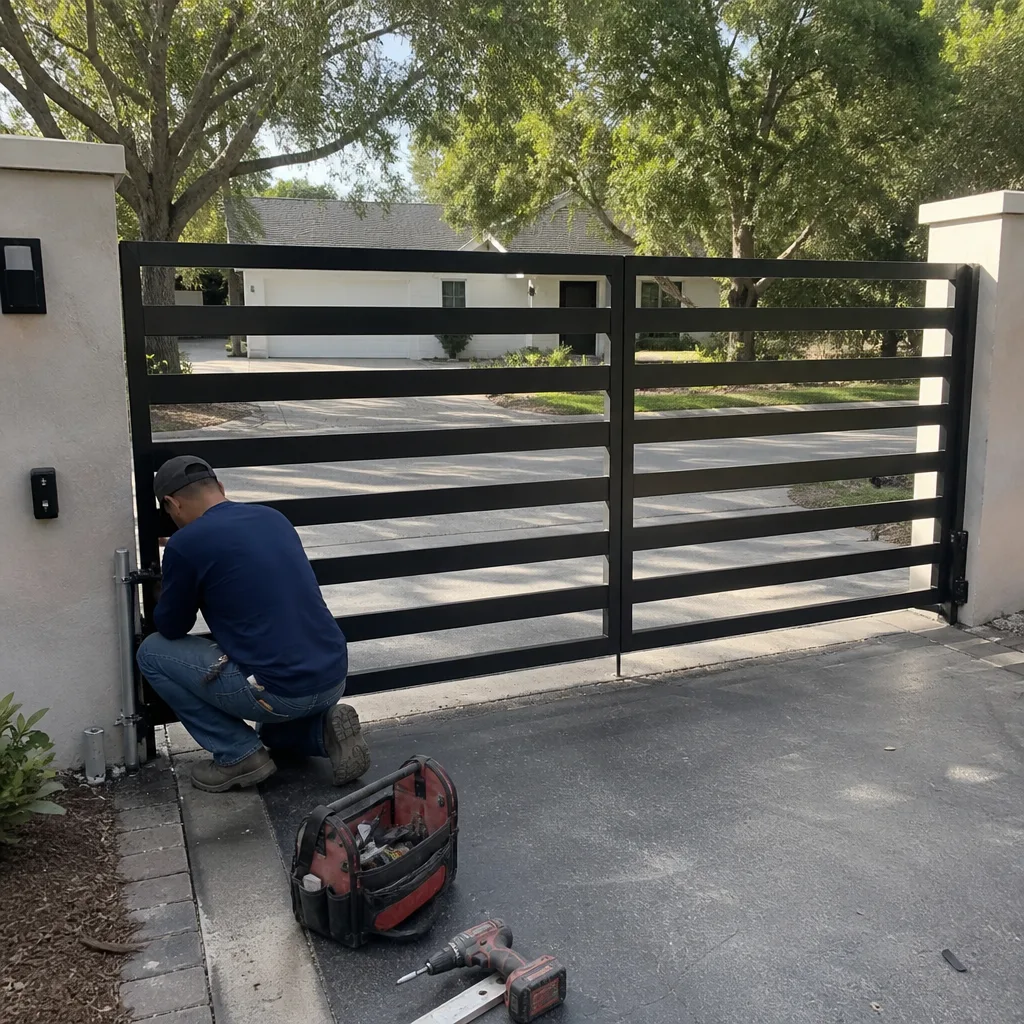 After
After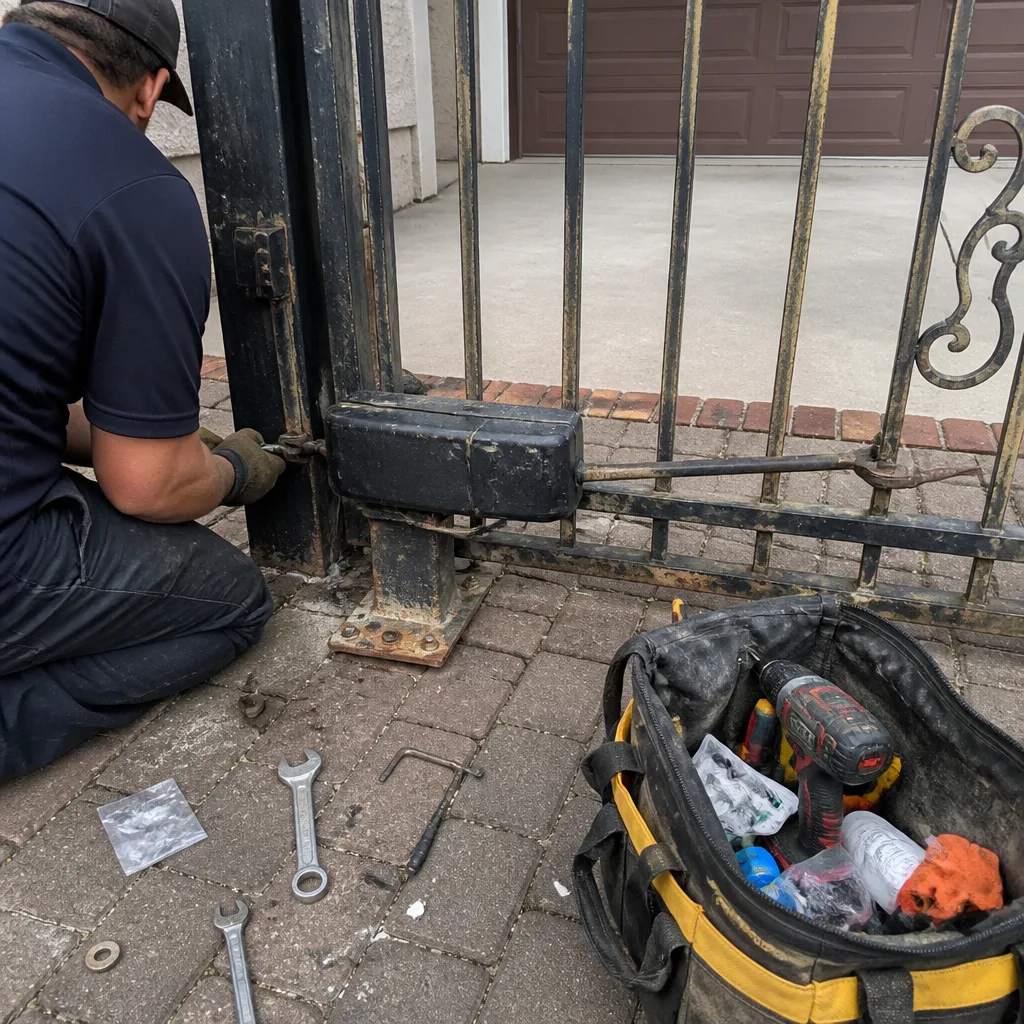 Before
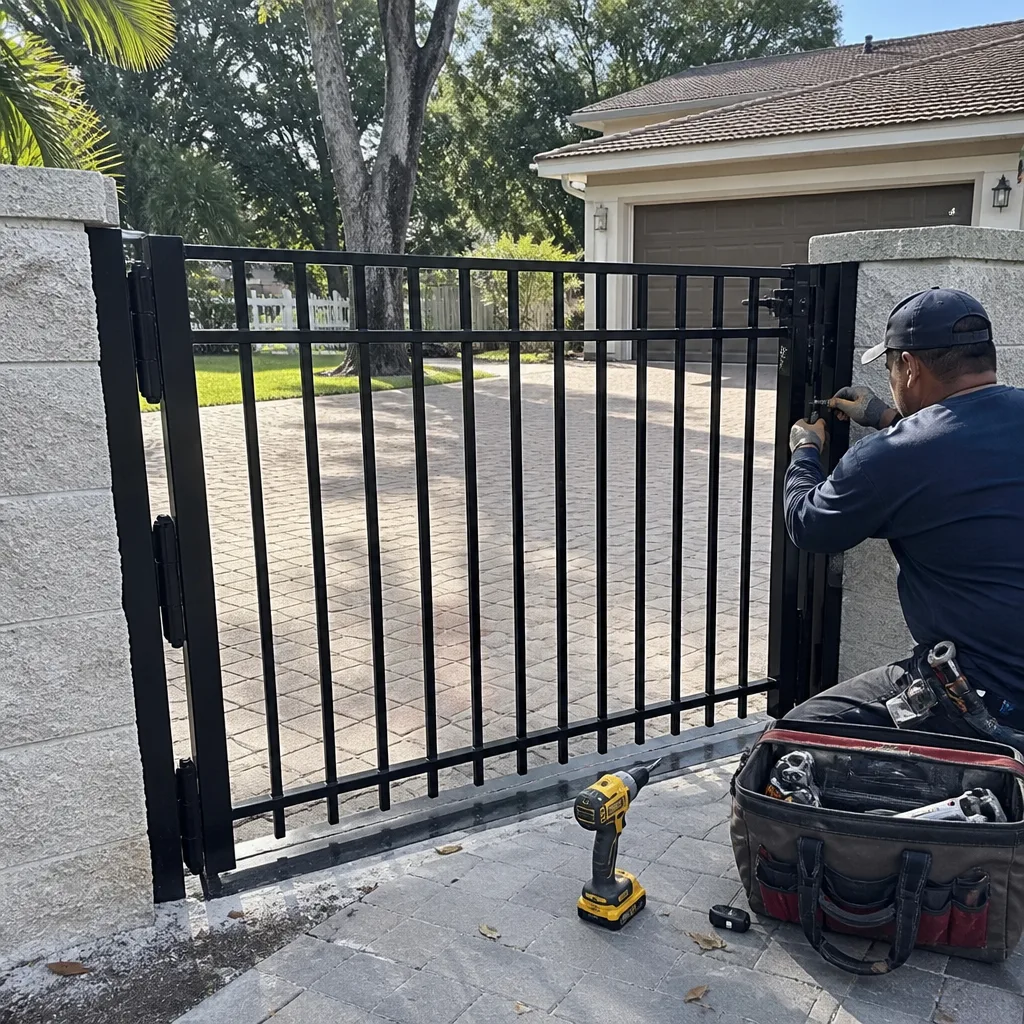 After
After