
Last updated October 16, 2026
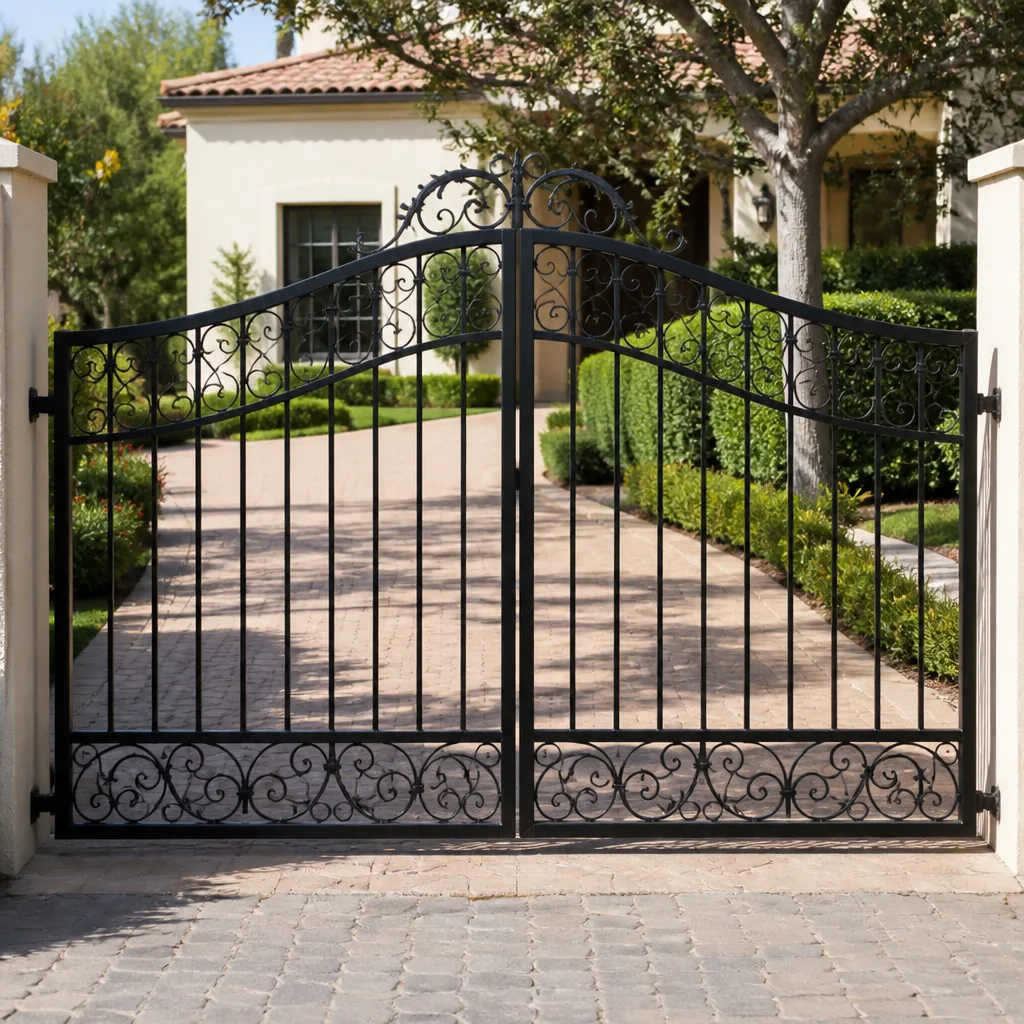 Wrought iron
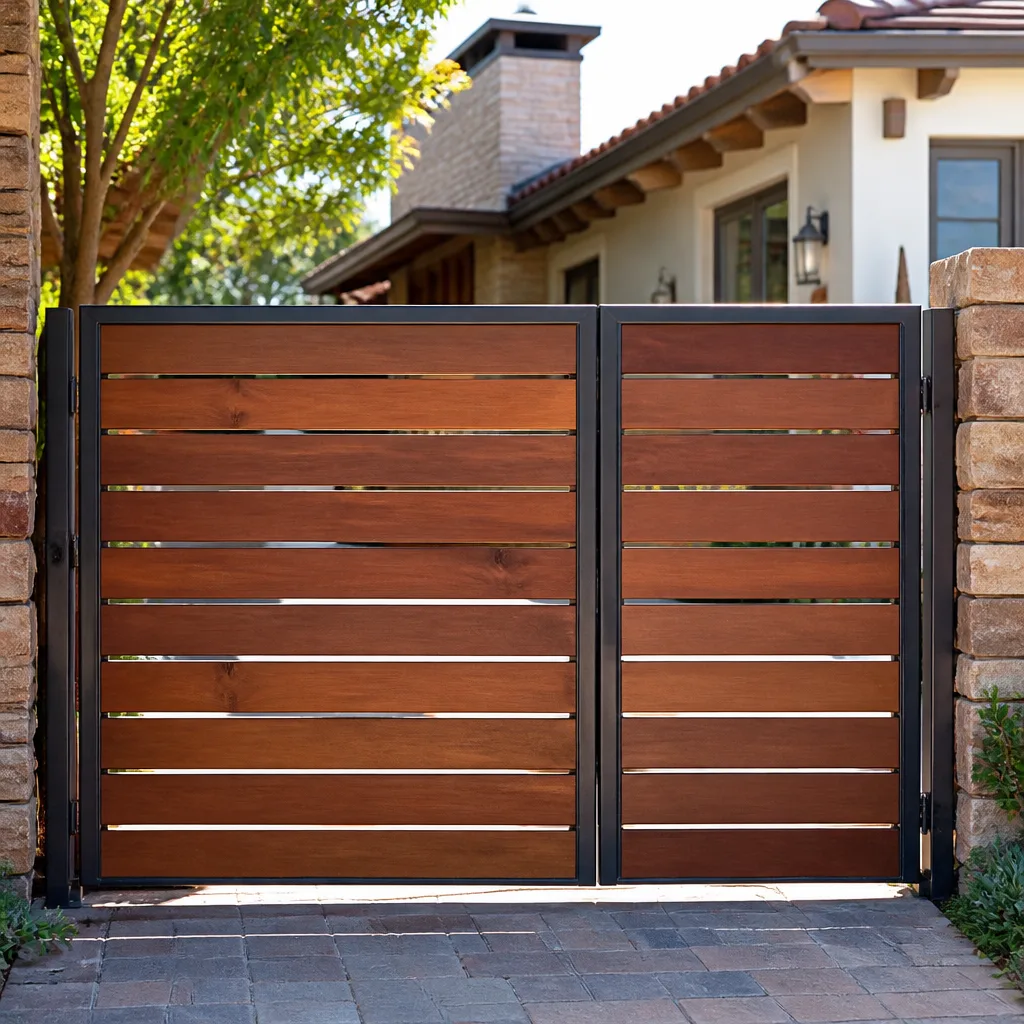 Wood & steel frame
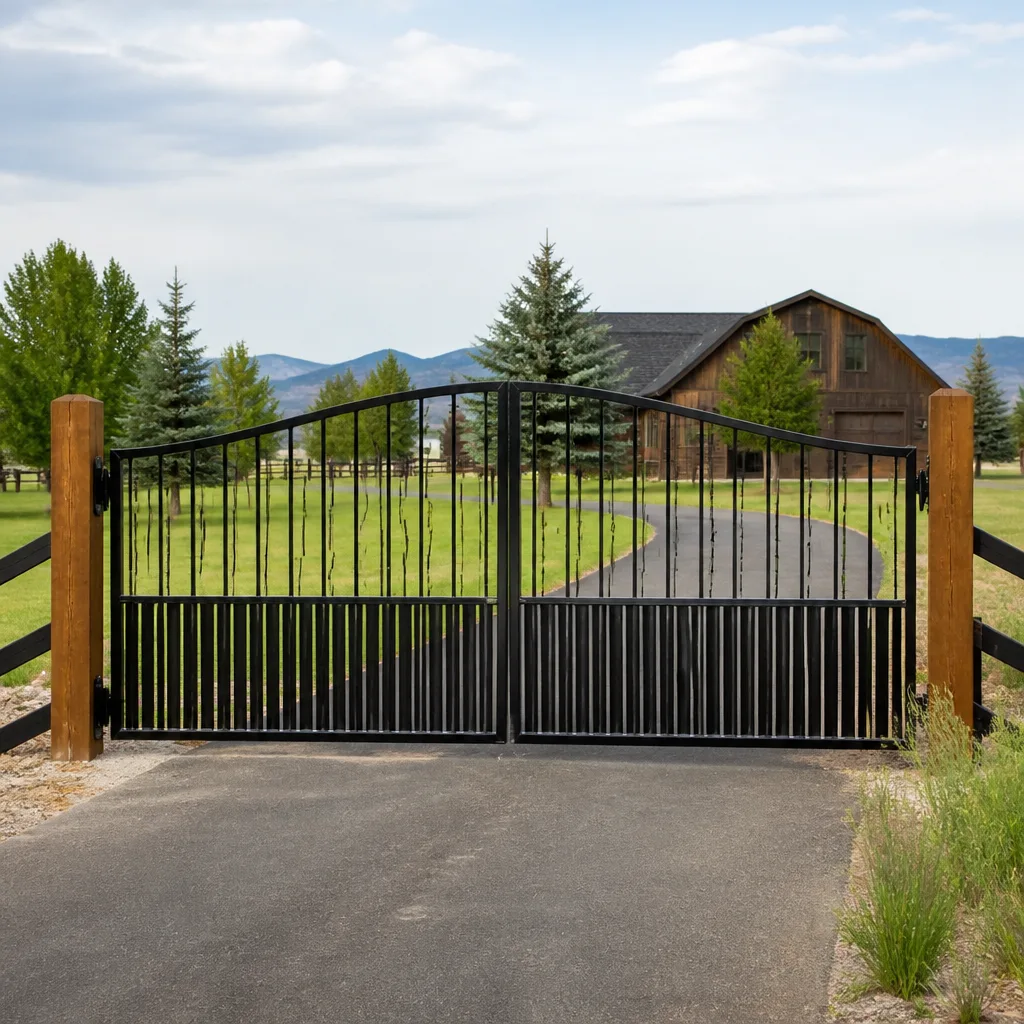 Farm & ranch
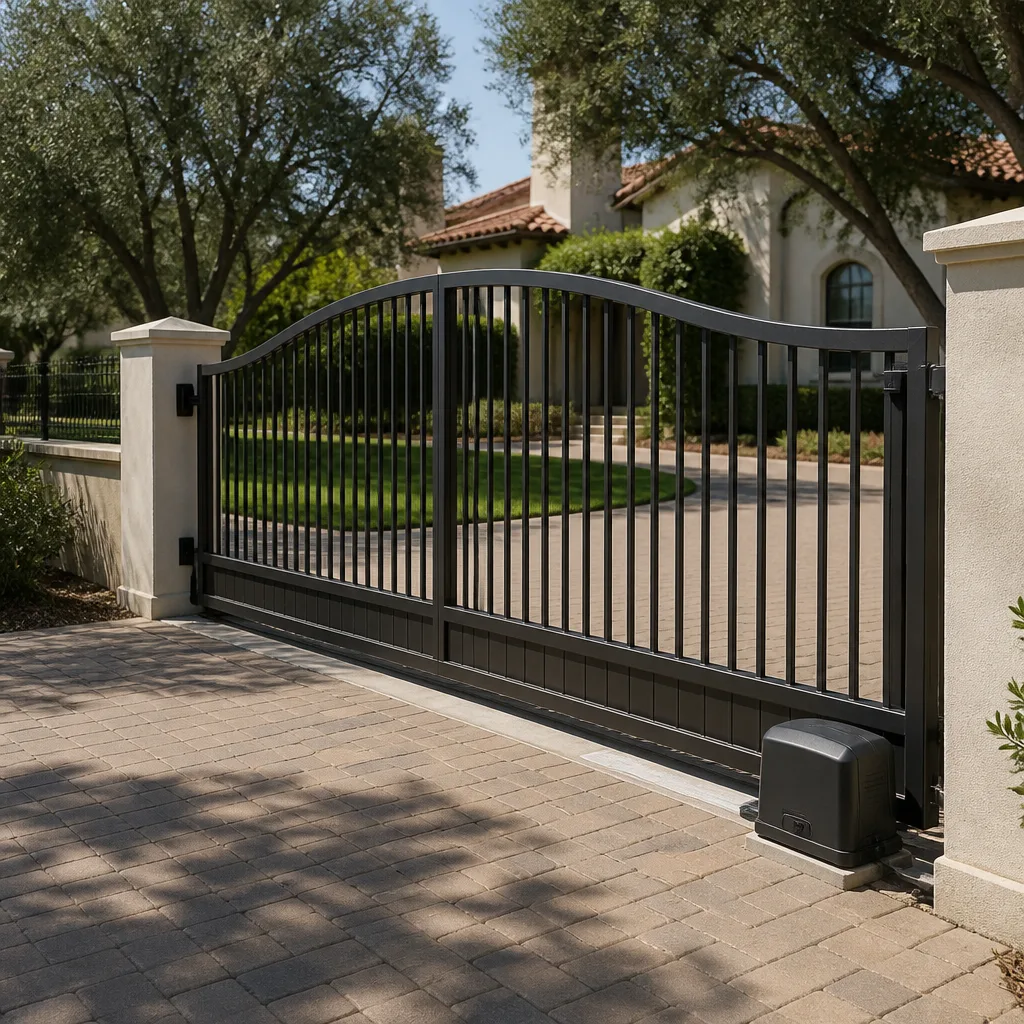 Sliding driveway gates
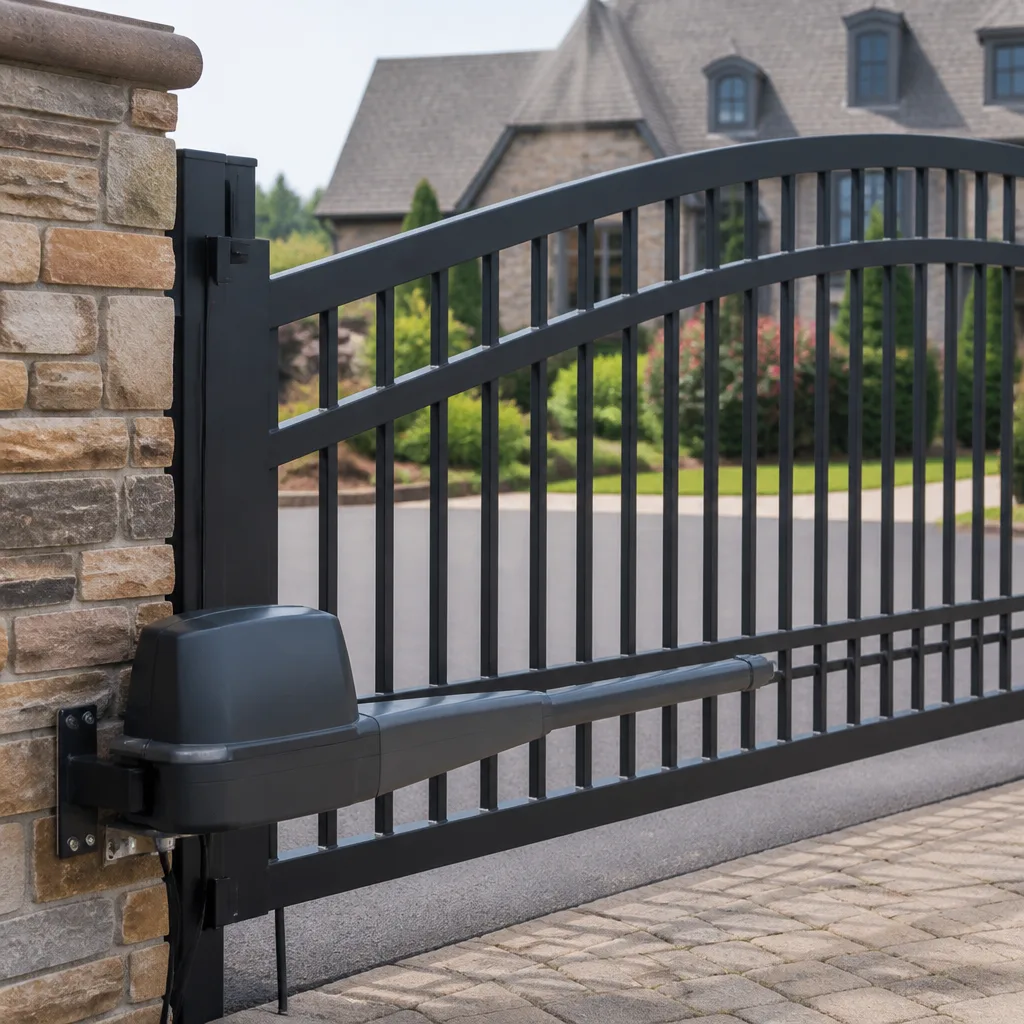 LiftMaster operators
Free on-site gate assessment - hinges, posts, and your LiftMaster or Nice gate operator checked before anything is quoted
The assessment is free and the quote is the invoice.
Get your free estimateSeasonal Gate Repair Care for Orlando: Year-Round Homeowner’s Guide
Most Orlando homeowners think about their automatic gate twice a year: when it stops opening, and when a hurricane is 48 hours out. That’s a costly habit. What we’ve learned from thousands of service calls across Orlando is that gate failures follow two predictable waves. The first hits in October, when hurricane-season moisture has been silently corroding control boards and limit switch housings for months. The second hits in March, when dry-season UV exposure has cracked rubber seals and degraded wiring insulation to the point of failure. Both waves are largely preventable with a seasonal routine that takes under an hour, four times a year. This guide gives you that routine, with the specific climate factors that make gate ownership in Central Florida different from anywhere else. For professional help, see our Gate Repair services.
Styles & brands we work with
Quick Answer
Seasonal gate maintenance in Orlando, Florida means treating two distinct stress periods differently: wet-season preparation (April – May) focused on surge protection, battery backup, and drainage around the gate operator, and dry-season inspection (November – February) focused on UV-cracked seals, oxidized weld points, and lubrication that thickens as humidity drops. A homeowner who follows a four-times-a-year inspection routine, documents everything with phone photos, and addresses minor issues before they compound will typically extend an automatic gate system’s service life by three to five years compared to reactive-only maintenance.
Table of Contents
- Why Orlando’s Climate Is Different for Gate Systems
- Wet-Season Prep (April – May): The Pre-Hurricane Checklist
- Summer Thunderstorm Season: Managing Daily Low-Voltage Spikes
- Post-Storm Inspection Protocol: What to Check in the Fall
- Dry-Season Care (December – March): UV, Seals, and Lubrication Changes
- The Photo-Documentation Habit That Saves You Money
- Common Mistakes to Avoid
- When to Call a Professional
- Frequently Asked Questions
- The Bottom Line
Why Orlando’s Climate Is Different for Gate Systems
Most gate maintenance advice online is written for places with actual winters. That advice doesn’t transfer to Orlando, and following it can actually cause problems here. Orlando’s climate creates two distinct stress environments that alternate across the year. From June through October, the region gets nearly daily afternoon thunderstorms, average humidity above 75%, and the annual hurricane season threat. From November through May, the humidity drops significantly, rainfall becomes sporadic, and UV index readings stay high even in January. A gate system in Orlando experiences more environmental stress in a single year than a gate in, say, Ohio experiences in five, not because of temperature swings, but because of moisture cycling and UV exposure that never really stops.
We see the evidence of this in the service patterns across Orlando neighborhoods. Gates in Lake Nona and Baldwin Park, where homes are newer and operators are often installed with better drainage, fail differently than gates in older Orlando neighborhoods like Colonialtown or Audubon Park, where settled concrete pads and older conduit runs create different water intrusion paths. The age of the home often matters more than the age of the gate operator itself, because the conduit and drainage infrastructure ages alongside everything else. That’s why a seasonal plan that accounts for Orlando’s specific moisture and sun patterns matters more than a generic “lubricate your gate in spring” checklist.
Understanding this is the foundation of everything else in this guide. Once you know that Orlando gates face two alternating stress seasons, the maintenance calendar writes itself. Here’s the full picture, starting with the most consequential season for equipment survival: hurricane prep.
Wet-Season Prep (April – May): The Pre-Hurricane Checklist
April and May in Orlando are the calm before the storm, and that’s exactly when you should be preparing your gate for what’s coming. The wet-season prep window matters because it’s the last stretch of reliably dry weather before the daily afternoon thunderstorm pattern kicks in. If you address drainage, surge protection, and battery health now, you’re not scrambling when a named storm is on the five-day forecast. Here’s the checklist we recommend for every Orlando homeowner with an automatic gate, whether you have a LiftMaster, FAAC, Mighty Mule, or any other opener brand.
- Inspect the surge protector. If your gate opener doesn’t have one, install one. Orlando’s lightning density is among the highest in the country, and a single nearby strike can send voltage spikes through your gate’s control board. A surge protector that’s more than three years old may have already sacrificed itself and be providing no protection at all. Look for indicator lights that show the unit is still protecting. If they’re out, replace it before storm season begins.
- Test the battery backup. If your gate has a battery backup (common on LiftMaster and FAAC residential operators), April is the time to test it. Unplug the operator from AC power and run the gate through a full open-close cycle. If it struggles, slows down, or doesn’t complete the cycle, the battery is degraded and needs replacement. In a hurricane, when power can be out for days, a functional battery backup is often the difference between a secure property and an open gate.
- Clear and grade the drainage around the gate operator. Orlando’s sandy soil drains fast when it’s dry, but heavy rain overwhelms it quickly. Walk the area around your gate operator and look for low spots where water pools. The operator should sit on a pad or mounting that keeps it above standing water. If it’s mounted too low or a nearby garden bed has shifted drainage toward it, address that now. Control boards that sit in even an inch of water for an hour are permanently compromised.
- Tighten and inspect all mounting hardware. Gate hinges, operator mounting bolts, and track hardware all loosen over time, and loose hardware is what turns a strong wind gust into a bent gate or a snapped operator arm. Re-torque everything. If a bolt spins rather than tightens, the hole is stripped and needs repair before the gate takes heavy wind load.
- Lubricate with the right product, not the convenient one. For Orlando’s wet season, use a lithium-based grease on metal-to-metal contact points (hinges, operator arms) and a silicone-based lubricant on plastic components like limit switch housings and guide rollers. WD-40 is not a lubricant. It’s a water displacer and solvent. It will actually strip the existing grease and leave your gate more vulnerable.
- Verify the manual release works. Most automatic gates have a manual release mechanism that lets you open the gate by hand when power is out. Test it now, before you need it in an emergency. If it’s rusted, seized, or you don’t know where it is, that’s a five-minute fix now and a major frustration during a power outage.
This full checklist takes most homeowners under an hour. For homeowners who’d rather not climb under a gate operator or re-torque hinge bolts, Gate Repair in Orlando is a service we provide year-round, with a written price before any work starts. The key is doing the prep now, not when the storm is already named.
Summer Thunderstorm Season: Managing Daily Low-Voltage Spikes
Between June and September, Orlando gets rainfall on roughly half of all days, and most of that rain arrives as afternoon or early evening thunderstorms. What few homeowners realize is that each of these storms, even when it’s miles away, can induce low-voltage spikes in the power grid that reach your gate opener. These aren’t the catastrophic surges that fry a board instantly. They’re small, repeated voltage fluctuations that degrade electronic components over a single summer. Think of it like erosion: no single wave destroys the cliff, but a season of storms does.
The components most vulnerable to this repeated stress are the control board’s capacitors and the limit switch circuitry. The limit switch is the small sensor that tells the gate when to stop at its fully open or fully closed position. When it degrades, the gate may start stopping short, reversing unexpectedly, or opening only partway. In our experience, Orlando homeowners often ignore these intermittent symptoms because the gate “still works most of the time.” By the time the gate stops working entirely, the board has been compromised for weeks.
So what can you do during storm season, beyond the April – May prep? Three things. First, if your gate opener is an older unit without built-in surge suppression, consider adding an external surge protector at the outlet, not just at the breaker panel. Second, after any storm with nearby lightning, do a quick visual check of the gate’s behavior: Does it stop in the same place? Does it reverse smoothly? Does the remote work at the same range? Any change is a warning sign. Third, if you notice intermittent behavior, don’t wait. The repair is usually a $200 – $400 parts-and-labor job for a limit switch or capacitor. Waiting until the control board fails entirely can push that to $800 – $1,500. If you’re seeing these symptoms, Electric Gate Repair in Orlando is exactly the service category to explore before the intermittent problem becomes a permanent one.
Post-Storm Inspection Protocol: What to Check in the Fall
If there’s a single pattern we could eliminate from our Orlando service calendar, it’s the October discovery call. Homeowner says, “The gate was fine during the hurricane, but now it won’t open.” That phrase, “was fine during the hurricane,” hides what actually happened: water got into a component in August or September, sat unnoticed for weeks, and caused corrosion that finally broke the circuit in October. The gate was never fine. It was quietly dying.
Here’s the post-storm inspection protocol that catches this silent damage before it becomes a no-open situation. Do this in October or November, even if your gate seems fine. Especially if your gate seems fine.
- Open the operator housing and look for water marks. If your operator has a removable cover, open it (power off first) and look for water staining, mineral deposits, or condensation trails. These indicate water intrusion. Even if the board looks dry now, water that came and went leaves evidence. If you see it, a professional should inspect the board for corrosion.
- Check the limit switch housing. This is the small box or lever assembly that tells the gate when to stop. It’s often mounted low on the gate frame, which makes it a prime candidate for puddle-level water intrusion. Look for discoloration, rust, or moisture inside the housing. A failed limit switch is the single most common post-storm repair we perform in Orlando.
- Inspect electrical connections for green corrosion. Pull the cover off any junction boxes along the gate’s wiring run. Look at the wire connections. Green or white powdery residue is corrosion, and it indicates moisture got where it shouldn’t have. Even if connections are still working, corroded wires have higher resistance and will eventually fail.
- Run the gate through five full cycles. Stand where you can watch it closely. Listen for grinding, clicking, or buzzing that wasn’t there before. Watch the gate’s movement: it should accelerate smoothly, travel at consistent speed, and stop in the same place every cycle. Any variation is a red flag.
- Check the gate’s physical alignment. High winds can shift a gate on its hinges or bend a track. If your gate now scrapes, drags, or refuses to fully close, the storm may have bent something. This is a structural issue, not an electronic one, and it needs to be addressed before the gate’s weight damages the operator.
The good news in all of this: if you catch water intrusion early, the fix is usually a cleaning, a re-seal, and a replacement of the affected seal or gasket. A few hundred dollars. If you wait until the gate won’t open, the fix is often a new control board or a new operator. A thousand dollars or more. The math is simple: October inspection beats October replacement.
Dry-Season Care (December – March): UV, Seals, and Lubrication Changes
When the Orlando humidity finally drops in late November, it feels like relief. For your gate, it’s a different kind of stress. The dry season brings intense, nearly uninterrupted UV exposure, lower humidity, and temperature swings between cold mornings and warm afternoons. These conditions attack the gate in three specific ways: rubber seal degradation, paint and finish oxidation at weld points, and lubrication breakdown. Each has a specific seasonal response.
UV damage to rubber seals. The rubber weather seals around your gate operator housing, the gaskets around wiring penetrations, and the rubber bumpers that cushion the gate at its open and closed stops all degrade under Orlando’s winter sun. UV radiation breaks the polymer bonds in rubber, causing it to become brittle and crack. Once a seal cracks, it stops sealing. Moisture from the next summer’s storms has a direct path into components the seal was protecting. Check every rubber component in December or January. If you can see cracks, replace them now. Rubbing your finger across a seal and seeing black residue is a sign of advanced UV breakdown.
Paint oxidation at weld points. Orlando’s dry season is when rust accelerates on gate frames, particularly at weld joints and wherever the powder coating has been scratched. The reason is simple: powder-coated steel protects itself through a continuous film. When that film cracks at a stressed weld, the underlying steel is exposed to oxygen, and winter’s temperature swings cause micro-expansion and contraction that works the crack wider. Look at every weld point on your gate in January. If you see rust starting, sand it lightly, hit it with a rust-inhibiting primer, and recoat. This is a two-hour DIY job that adds years to a gate’s life. Ignored, that same rust will penetrate the frame within two to three seasons.
Lubrication changes when humidity drops. The grease you applied before hurricane season behaves differently in 30% humidity than it does in 80% humidity. High-humidity conditions keep certain greases flowing; dry air makes them tacky and thick. If your gate starts moving slightly slower or the operator motor sounds like it’s working harder in December or January, don’t assume the motor is failing. It may simply be that the lubrication has thickened. The fix is often as simple as cleaning the old grease off and applying a lighter formulation for the dry season. If you have a Mighty Mule or other low-voltage DC operator, pay special attention here: these units have less torque to overcome thickened grease, and the extra load can trip their current-limiting circuits.
One Orlando-specific note: the dry season is also the best time to schedule non-urgent gate repairs. The weather is predictable, the ground is dry, and parts arrive without storm-related shipping delays. If your gate has been showing intermittent symptoms you’ve been putting off, winter is the window to address it. Gate Opener Repair in Orlando is in highest demand from October through May, and scheduling dry-season work means faster availability and a wider choice of appointment times.
The Photo-Documentation Habit That Saves You Money
Here’s the single highest-ROI maintenance habit we can recommend to any Orlando homeowner with a gate: take photos. Not when something breaks, but on a regular schedule, before anything breaks. A simple monthly phone photo of your gate’s key components creates a visual record that pays off in three different ways. It’s the cheapest insurance policy you’ll ever have on your gate system.
Warranty claims. Most gate opener manufacturers (including LiftMaster and FAAC) require evidence of regular maintenance when you file a warranty claim for a failed component. A monthly photo log showing a clean, well-maintained operator is exactly the documentation that gets claims approved. Without it, manufacturers can and do deny claims on the grounds of improper maintenance. Your phone photo says, “I was on top of this.” The absence of photos says, “Prove you weren’t neglectful.”
Insurance disputes. After a hurricane or storm-related incident, insurance adjusters want to know what condition the gate was in before the event. If you can show photos from April that document a well-maintained gate, an intact surge protector, and properly torqued hardware, your claim for storm damage is much stronger. If your only photo is from after the damage, the insurer has room to argue the gate was already failing. Orlando homeowners who document pre-storm equipment condition consistently get faster, more complete claim resolutions.
Repair diagnostics. When your gate does have an issue, the first thing any good technician asks is, “When did this start?” If you have a monthly photo log, you can answer that question precisely. “Here’s what the limit switch housing looked like in August, and here it is in October.” That comparison tells us whether a problem developed gradually or suddenly, which often determines whether a simple repair will last or whether a deeper issue caused the failure. A photo of the operator housing from before a storm is also essential for showing what water intrusion damage is new.
The habit itself takes about three minutes a month. Walk around your gate. Take photos of: the operator housing (exterior), the control board (if accessible), the limit switch areas, all hinge and weld points, and the gate’s full length from both sides. Store them in a folder on your phone labeled with the month. That’s it. Three minutes, twelve times a year, and you’ve built the single most useful diagnostic, warranty, and insurance asset a gate owner can have.
Common Mistakes to Avoid
- Using WD-40 as a lubricant. WD-40 is a solvent and water displacer, not a lubricant. It strips the existing lubricant from hinges and operator arms, leaving metal-on-metal contact that accelerates wear. Use lithium grease or silicone lubricant, matched to the component material.
- Waiting for the gate to stop working before calling for help. Intermittent issues like partial opening, slow movement, or grind sounds are early warnings. By the time the gate fails completely, the repair is usually two to three times more expensive than it would have been at the first symptom.
- Testing the battery backup only during a power outage. Batteries degrade gradually. If the first time you test your battery is during a post-hurricane blackout, you’ll discover it’s dead exactly when you need it most. Test batteries in April and October.
- Ignoring drainage changes. Orlando landscaping shifts over time. A garden bed that grows, a new paver path, or settling soil can redirect water toward your gate operator without you noticing. Re-evaluate drainage every spring, not just when the gate was installed.
- Assuming a surge protector lasts forever. Surge protectors wear out. A unit that has absorbed multiple surges over several hurricane seasons may be providing zero protection while looking perfectly fine on the outside. Replace surge protectors every three to four years as a rule of thumb.
- Failing to document maintenance. Not taking photos is a mistake with compounding costs. Without visual records, warranty claims get denied, insurance disputes get harder, and repairs take longer to diagnose. A three-minute monthly photo habit prevents all three.
- Lubricating without cleaning first. Applying fresh grease over old, contaminated grease just creates a grinding compound that accelerates wear on hinge pins and operator arms. Clean the old lubricant off before applying new product.
When to Call a Professional
Some gate maintenance tasks are genuinely DIY-appropriate: visual inspections, drainage checks, photo documentation, light rust remediation, and basic cleaning. Others aren’t, and knowing the line between them keeps you safe and your gate working. See our DIY vs Professional Gate Repair: The Orlando Homeowner’s Decision Guide for help deciding. Call a professional if your gate is making grinding or metal-on-metal sounds that persist after lubrication, if the gate is visibly sagging or scraping the ground, if you see exposed or corroded wiring, if the operator is blowing fuses or tripping breakers, or if the gate reverses direction after closing. These are structural or electrical issues that can cause injury if handled incorrectly, and on modern openers, the tension in the system is often under load even when the gate is stopped. Calder Gate Repair Orlando offers free estimates in Orlando, and every job carries a written price before any work starts, a written guarantee, and a free second visit if the repair fails within 365 days. Call (850) 338-6230 when you need us.
Frequently Asked Questions
A seasonal inspection and tune-up in Orlando typically runs $125 – $225 for most residential gate systems, which covers lubrication, hardware tightening, limit switch adjustment, and a full component inspection. If the inspection reveals worn parts, those are quoted separately before any additional work is done. Call (850) 338-6230 for an exact quote on your specific gate system, and remember that every Calder Gate Repair estimate is free and includes a written price before anything starts.
Plan on lubricating your gate twice a year in Orlando, once in April before the wet season and once in December at the start of the dry season. The April application uses a heavier grease suited to high humidity, and the December application uses a lighter formulation for drier conditions. In between, visual checks are enough for most gates.
Yes, most of the inspection and light maintenance described in this guide is DIY-appropriate: photo documentation, visual checks, drainage assessment, light rust treatment, and basic cleaning. For more guides & resources, visit our blog. Anything involving electrical components, opener disassembly, or structural hardware under load is better left to a professional, both for safety and because a mistake can void your opener’s warranty.
Our technicians are factory-familiar with nine major gate opener brands, including LiftMaster, FAAC, Mighty Mule, Elite, and most residential and light-commercial systems you’re likely to own. If you have an opener brand or model question, call (850) 338-6230 and a live person will tell you whether we service it, 24/7.
After a hurricane passes, check five things in this order: the operator housing for water marks or moisture, the limit switch housing for water intrusion, all electrical connections for green or white corrosion, the gate’s alignment and clearance, and the function of the manual release. If your gate shows any erratic behavior in the weeks after a storm, even if it seemed fine during the event, have it inspected.
A quality residential gate opener in Orlando lasts 7 – 12 years on average with proper seasonal maintenance, while the same unit might last 10 – 15 years in a drier, less lightning-prone climate. The difference comes from Orlando’s combination of daily summer thunderstorms, prolonged UV exposure, high humidity, and occasional hurricane-related electrical events. Regular maintenance is what pushes your unit toward the top of that range.
The Bottom Line
Orlando gates fail in patterns, and those patterns are predictable if you understand the climate. Wet-season prep in April and May protects your system from the daily electrical stress and moisture intrusion that peaks from June through October. Dry-season care in December through March addresses UV damage, seal degradation, and lubrication changes that set up failures in the spring. Between those two maintenance windows, a monthly photo habit gives you a visual record that strengthens warranty claims, insurance cases, and repair diagnostics. None of this is expensive or time-consuming. What’s expensive is the October no-open call and the March motor replacement, both of which are almost always the cumulative result of small, catchable issues that went unaddressed. If you’d rather not do any of this yourself, Calder Gate Repair Orlando handles every step, with a written price before any work starts and a 365-Day Done Right Promise that includes a free second visit if the repair fails. Call (850) 338-6230 for a free estimate, or visit the Calder Gate Repair Orlando home page to learn more about how we work.
Written by Nico Alvarez, Owner at Calder Gate Repair Orlando, serving Orlando since 2009.
See the difference
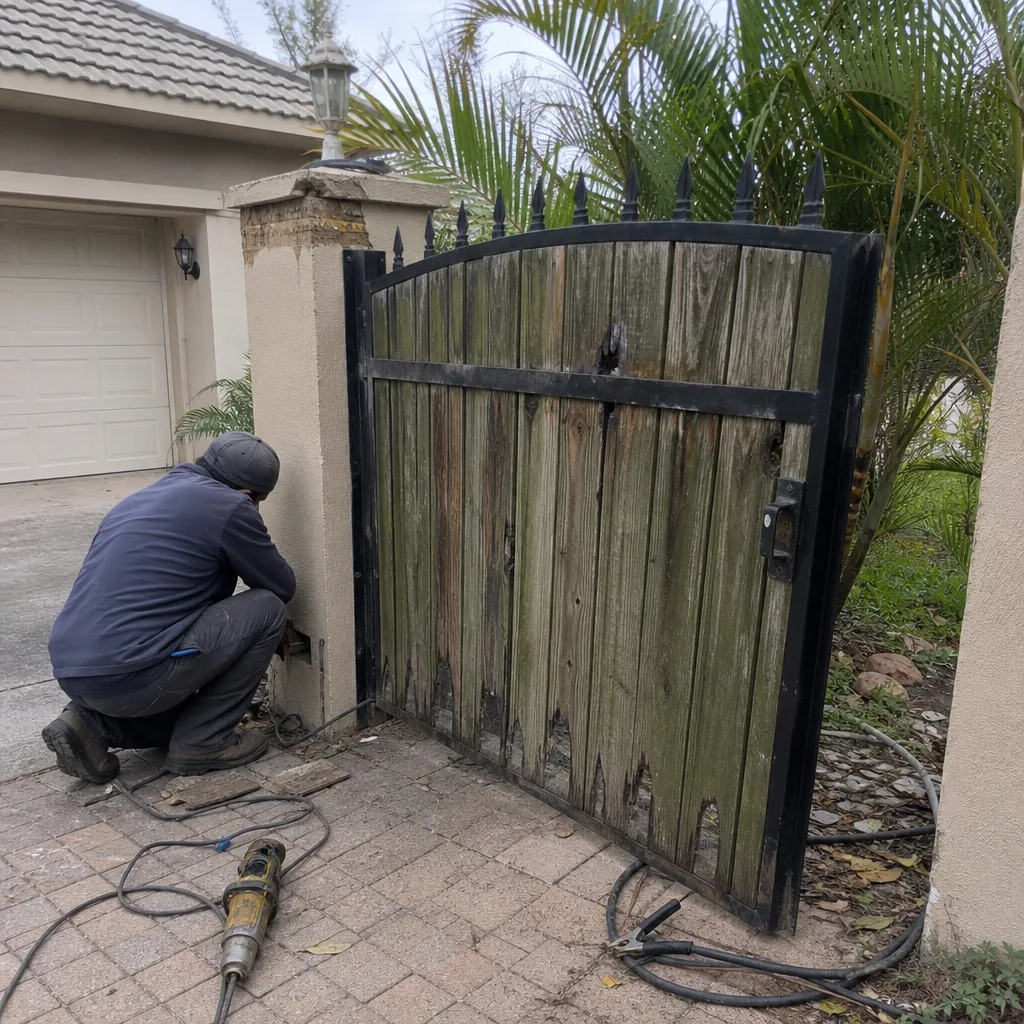 Before
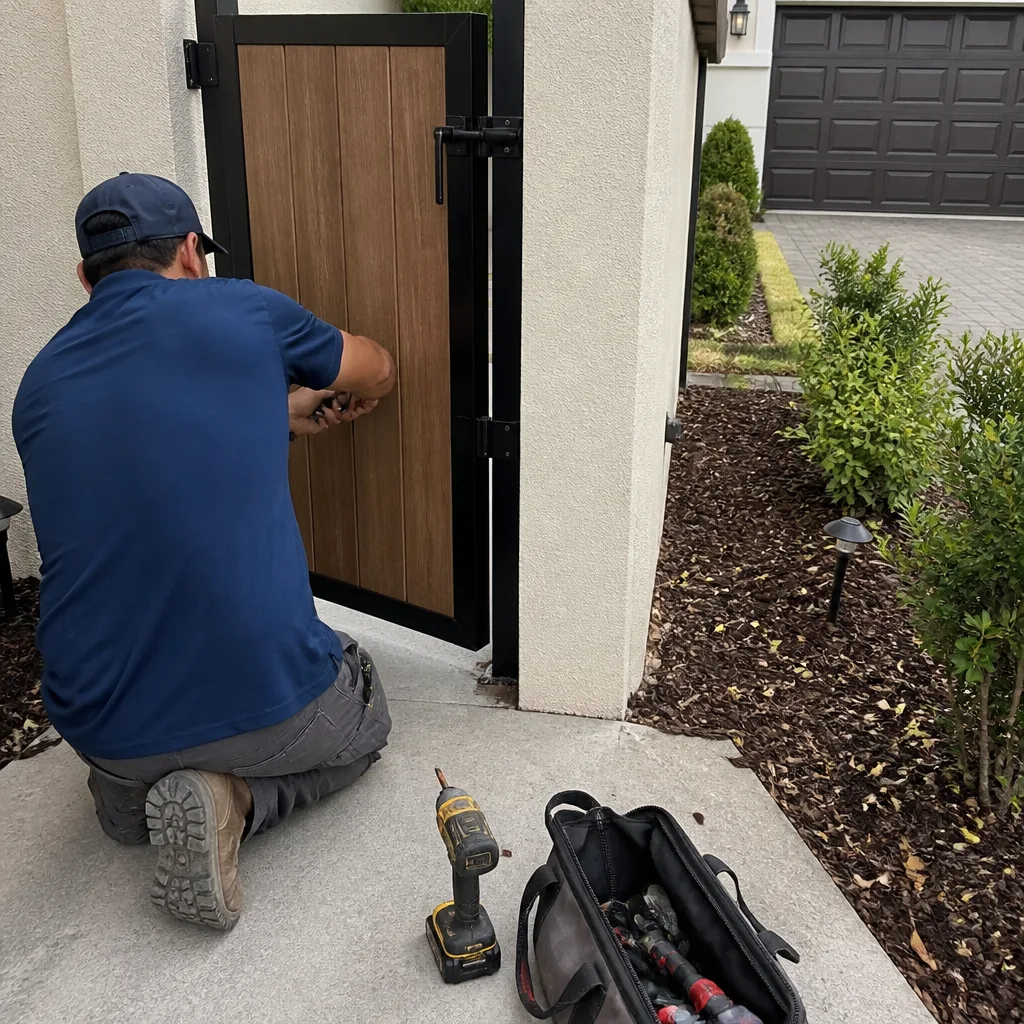 After
After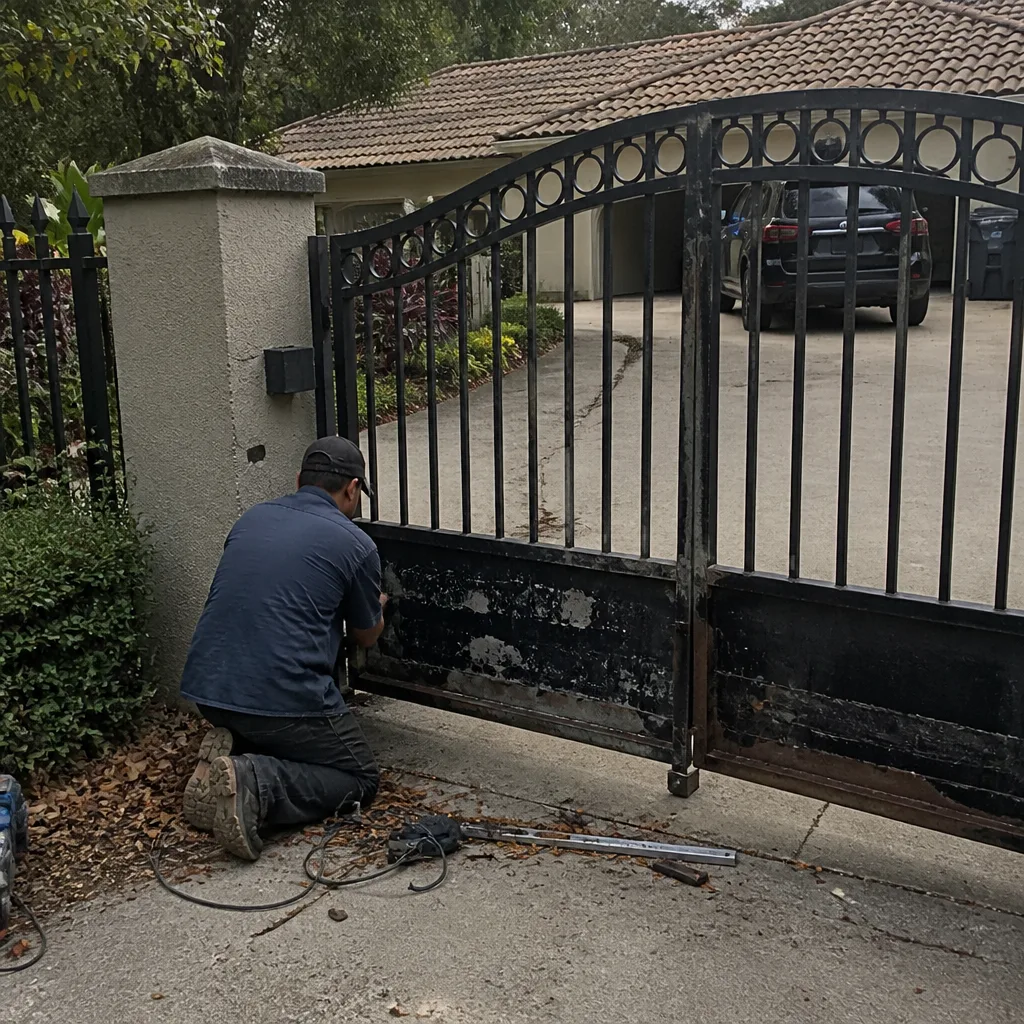 Before
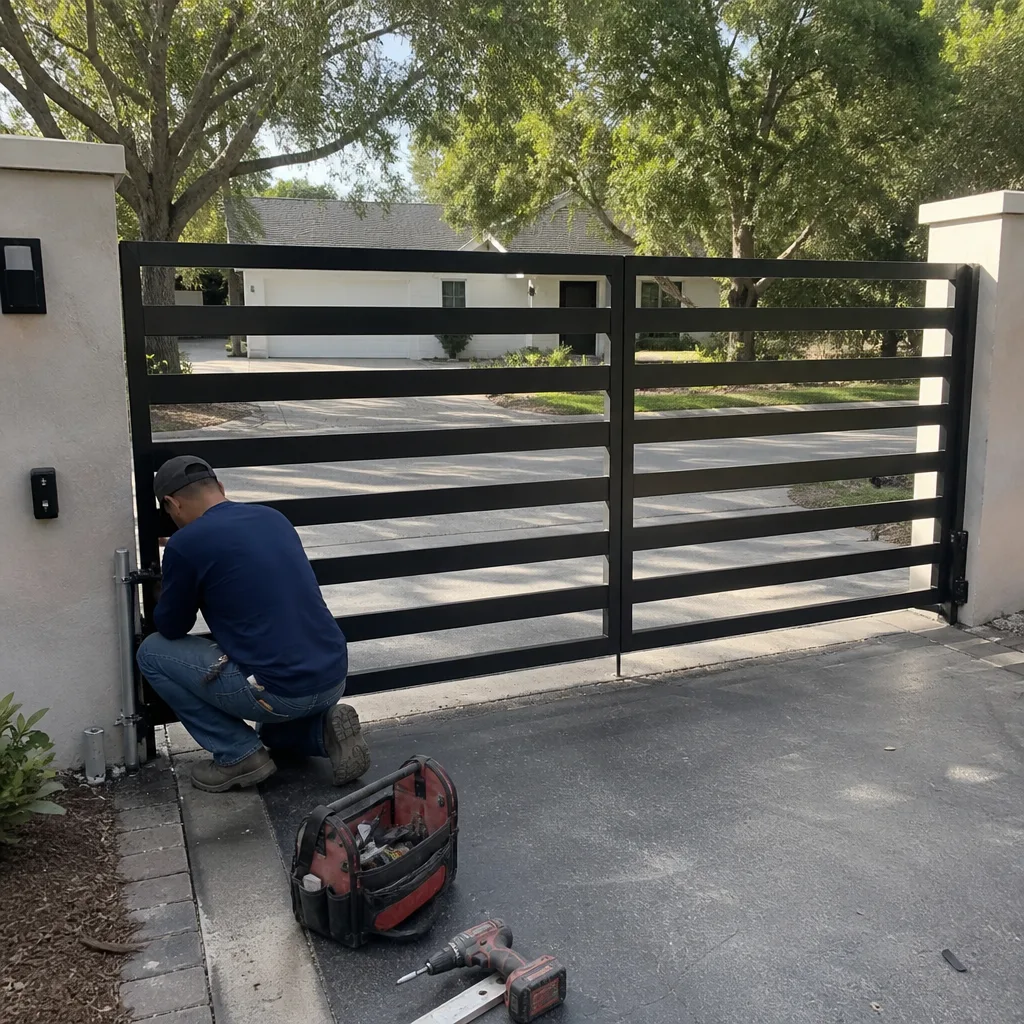 After
After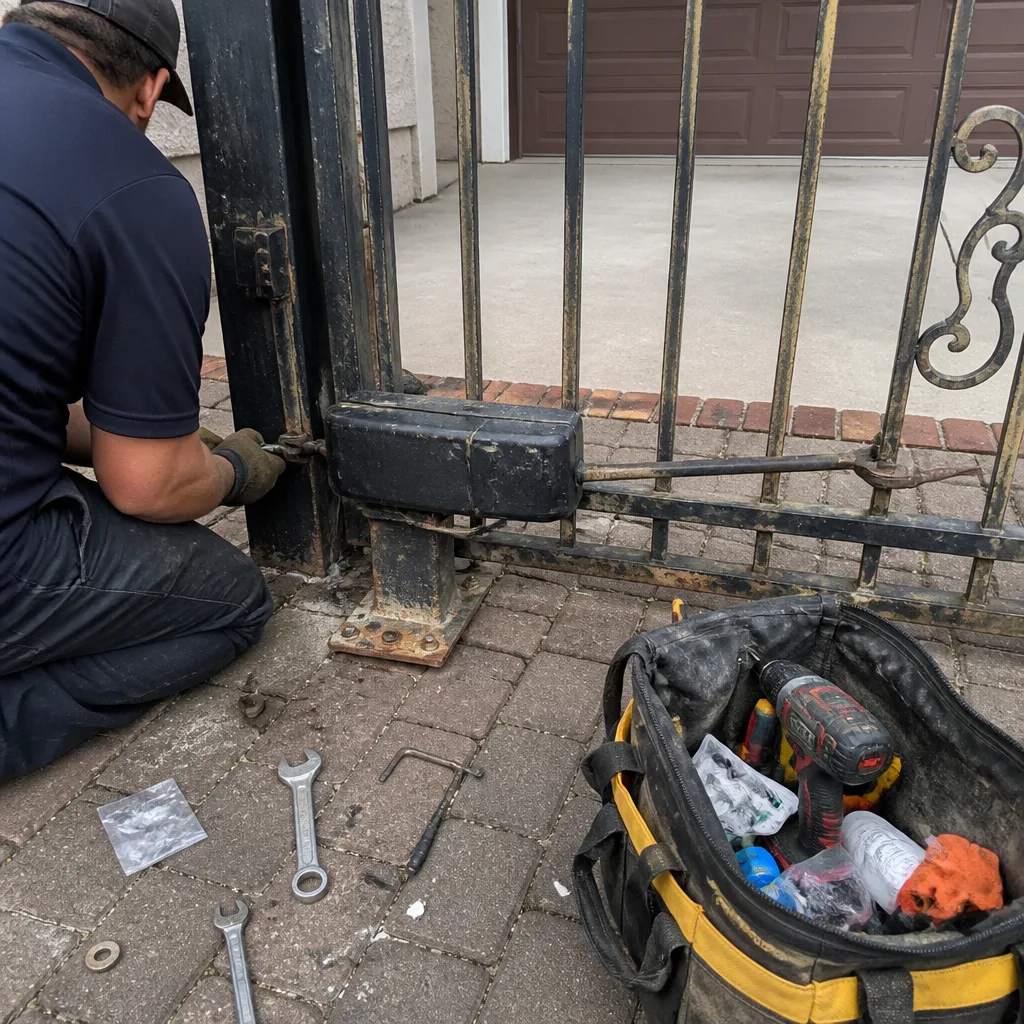 Before
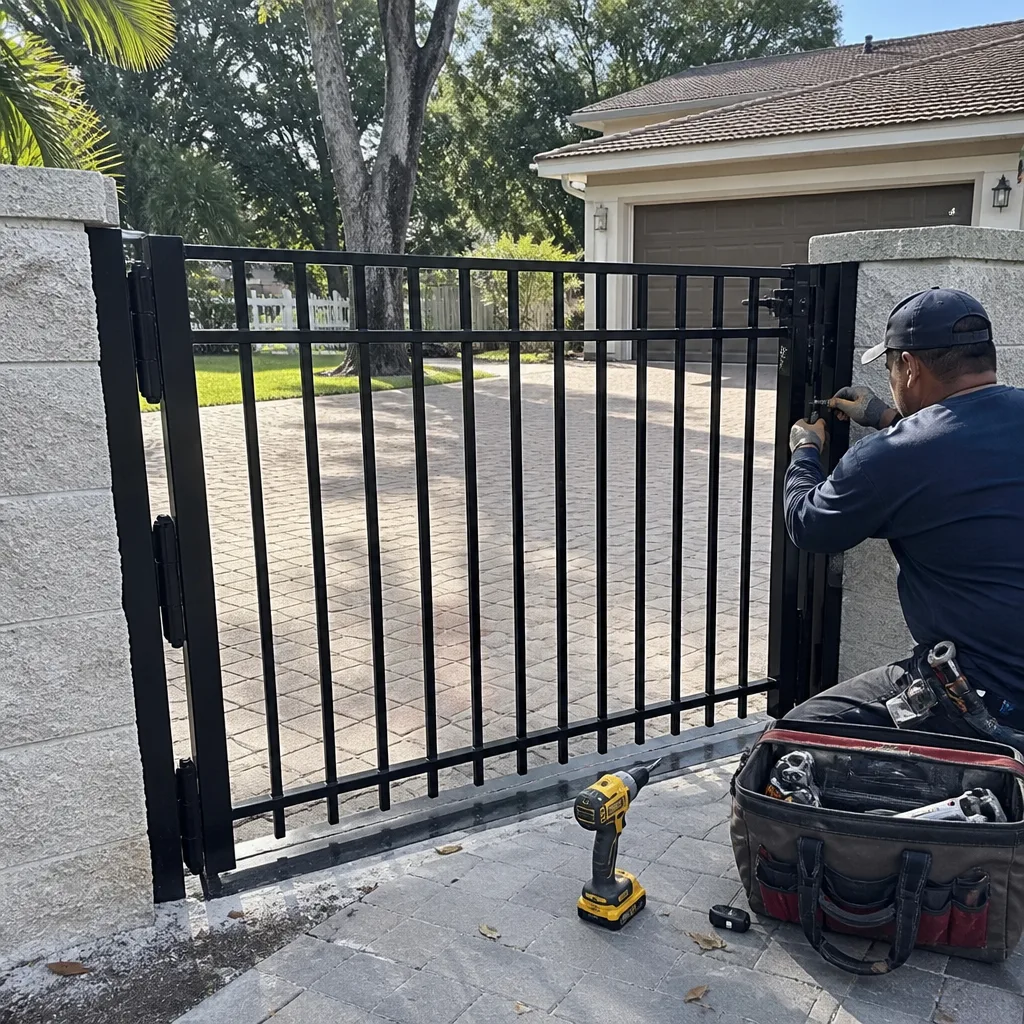 After
After